
Education is one of the greatest agents of individual empowerment, social mobility, and national development. In most low-income countries only a little more than half of the young people reach secondary school level. Education is a luxury for millions and not a right.
But in a world filled with inequity, how free is quality education for everyone?
The United Nations acknowledged the growing challenge and included Sustainable Development Goal 4 (SDG 4) which aims to transform this reality by ensuring equitable, inclusive, and quality education and lifelong learning opportunities for all regardless of gender, geography or socioeconomic status. SDG 4 has the following targets to be met by 2030.
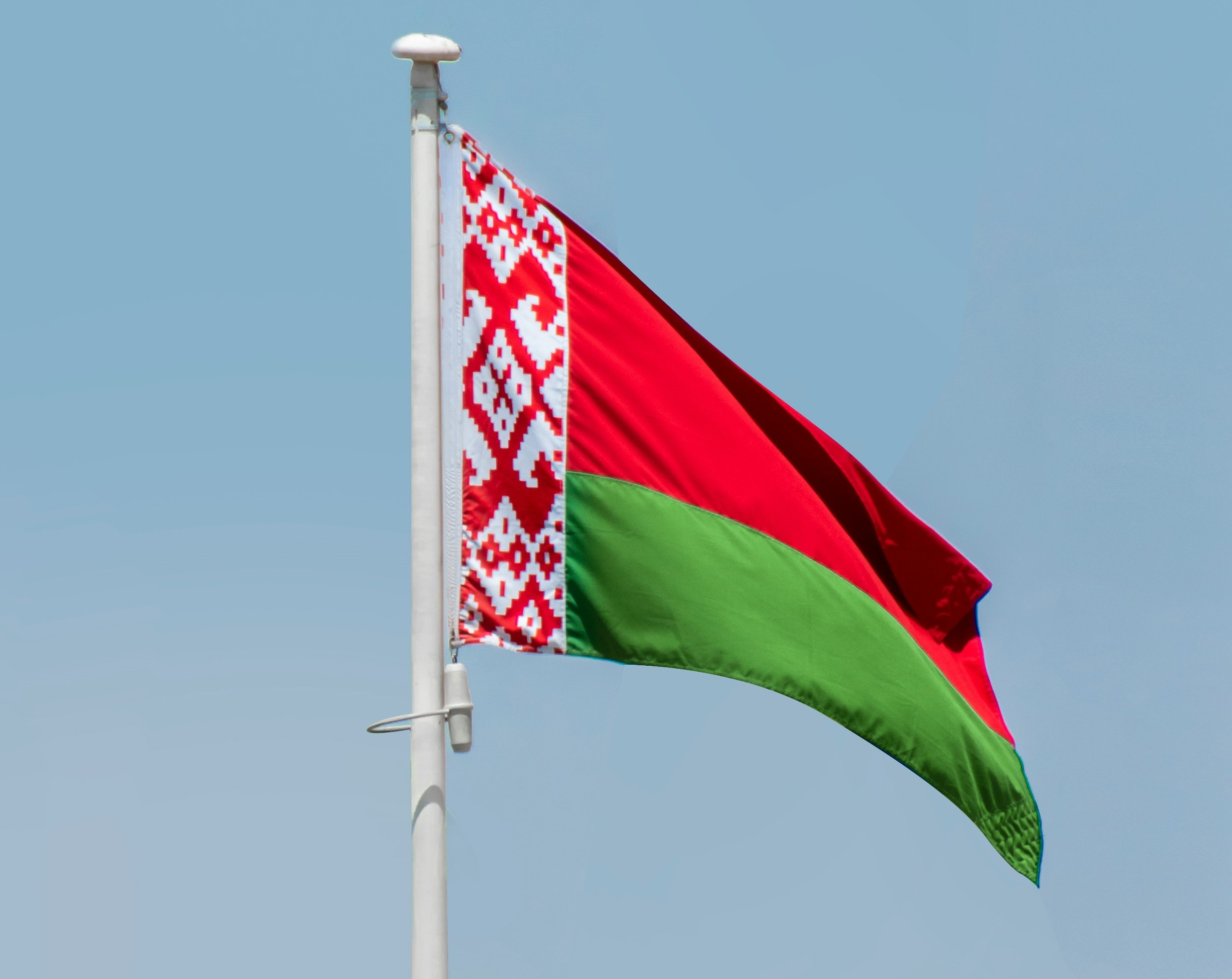
This article explores how Belarus is striving to meet this ambitious goal and make education truly universal.
Background on Education System
Belarus went through numerous drastic and deep transformations in their education system. The nation went through repeated suppression of their freedom, education, culture, language, literature, and history to become one of the most successful and effective nations in the fulfillment of SDG objectives. Belarus was the 30th of 166 nations in the Sustainable Development Goals fulfilment ranking in 2024 with a score of 78.6 out of 100.
Before 1917, Belarus was part of the Russian Empire. Under which Education was limited and not provided in rural areas and proletarian regions. Schools and Educational institutions were church run focusing mainly on religious and basic literacy. The language of instruction was Russian while suppressing the Belarusian language in formal education and teaching.
Literacy was poor with peasants and women having little access to education and schooling.
Following the Soviet Seizure of 1917, Education in Belarus was transformed. Schools were viewed by the new regime as a means of creating a socialist nation, and it therefore promoted free, universal education, increased literacy drives, and permitted instruction in the Belarusian language for the first time in years. For countless rural families, this was the first genuine opportunity to have children educated and hope for a future other than farm or factory labor.
In the 1930s , Stalinist reforms reversed Belarusianization and Russian became the dominant and main language of the country. Stalinist reforms focused primarily on ideological conformity, Marxist-Leninist ideology, Soviet history, and loyalty to the state. Many academians, teachers, professors had to face suppression of thoughts which cost them academic freedom, intellectual diversity, and the loss of a generation of educators through political repression.
Between 1950 and 1991, Belarus experienced a dramatic shift in education under Soviet control. Schools grew extensively, spreading even to the most distant rural villages, so that nearly every child gained access to basic education. The education was highly standardized with strong emphasis on science, mathematics, and technical training to equip students for the industrial world. Belarusian language and culture, however, were relegated to the periphery, as Russian was used as the main language of study. Education was also highly politicized—students learned Marxist-Leninist doctrine alongside their normal courses. Vocational schools thrived, providing young people with direct entry into factories, farms, and engineering work. Teacher education was upgraded, and literacy rates skyrocketed, making education one of the nation’s greatest post-war success stories. By the late 1980s, Belarus boasted one of the Soviet Union’s most educated populations, although it was at the expense of cultural and political diversity within the classroom.
SDG 4 Targets and Status
Belarus consistently leads world averages in almost all SDG 4 indicators. For completion rates, the nation has almost universal levels 99.8% at primary, 99.1% at lower secondary, and 92.9% at upper secondary (2024 estimates). World averages are much lower, at around 88% at primary, 78% at lower secondary, and 59% at upper secondary. Belarus is way ahead, especially below secondary education at the upper level, where it is more than 33 percentage points ahead of the world average.
Access to schooling in the early years is another extremely powerful predictor. Belarus boasts an adjusted net enrollment of 98.2% of children who are one year older than primary school and 86.9% developmental readiness in children between 24–59 months. Globally, enrollment does not reach this level until about 67%, so Belarus is over 30 percentage points higher than the world rate. Belarus’s near-universal coverage ensures that almost all its children enter school with a strong foundation.
Adults’ and young people’s engagement with education and training has also risen dramatically. Adults between 25–64 years old raised their engagement from 3% between 2016–2021 to 18.8%, a performance consistent with most of the world where participation in lifelong learning remains in low single digits. Although limited benchmarking data exist internationally across this area, Belarusian steep growth illustrates a high culture of continuing learning.
When the out-of-school rates are taken into account, Belarus performs far better than the international average again. Primary out-of-school rates rose from 0.5% in 2013 to 3.7% in 2023, and upper secondary from 2% to 5% between the two years. Although they did rise, they remain far lower than the international rates of approximately 9% for primary-age children and 17% for all children aged 6–17.
In school buildings, Belarus has obtained almost universal coverage of key services. From 2016, 100% of primary, lower secondary, and upper secondary schools have been electrified, provided with safe drinking water, handwashing, sanitation, and pedagogical use of computers. Pedagogical access to the internet increased from 80.9% of primary schools in 2016 to 99.9–100% of all levels of schools in 2022. In international perspective, most of the low- and middle-income countries are still far behind even 80% coverage of basic facilities, and Belarus is at the forefront in this aspect.
Although no adult literacy data exist for Belarus, world averages place adult literacy at 86% and youth literacy at 92%. Given its high rates of graduation and strong infrastructure, it is highly likely that Belarus’s literacy rates are far above these world averages.
Overall, Belarus is an education system that performs highly and ranks at the top of the world on completion rates, early childhood enrollment, provision of infrastructure, and out-of-school reduction. The country’s statistics are generally 20–40 percentage points higher than world averages, placing it among global leaders. The main areas of potential further improvement are enhancing learning proficiency in reading and mathematics, assessing ICT skills and literacy outcomes, and halting recent rises in out-of-school.
Government Policies and Strategies
- Education Law of 1991 – The law of 1991 established a legal framework for a unified state-controlled education system in an independent Belarus. Under the law free education was provided at preschool, primary, secondary, and higher levels for citizens. The government set up a high level of educational standards to ensure consistency and efficiency across the country. Formally acknowledged the Belarusian and Russian languages of education, with special focus placed on using Belarusian to support national identity. Allowed schools and universities limited degrees of autonomy, but retained overall authority within the Ministry of Education.
- Bologna Process Adaptation & Higher Education Reform- Belarus signed on to the Bologna Process in 2015, pledging to bring its higher education system into line with European standards—adopting a two-tier (bachelor–master) system, credit transfer systems, and assurance quality mechanism. It Enhanced international recognition of Belarusian degrees, greater opportunities for student exchange, and facilitated modernization of university teaching practices.It was signed by 29 European nations (more than 49 participate now), and although it began in the EU, nations not in the EU such as Belarus have also attempted to conform to it in an effort to integrate into the European Higher Education Area (EHEA).
- National Programme for the Development of Education (several phases since early 2000s) – This sequence of long-term state programmes constituted one of Belarus’s most ambitious attempts at post-independence modernization of the education sector. Rolled out in several phases (for instance, 2001–2005, 2006–2010, 2011–2015, and further), the policy concentrated on improving educational infrastructure in both urban and rural settings, increasing access to quality preschool education, and the adoption of new pedagogical approaches. One of the major focuses was to incorporate information and communication technology (ICT) into classrooms, set up computer laboratories, and give internet access to schools across the country. Systems for teacher training were overhauled with enhanced resources for professional development, pedagogical research, and compensation incentives. The program also urged curricular reforms to harmonize Belarusian national identity with global standards of education to ensure that students were competitive globally while preserving cultural and linguistic heritage. The program further advocated for inclusive education among children with special needs and aimed to minimize urban–rural differences in learning achievements.
Challenges and Barriers
Belarus’s post-1991 educational reforms encountered a combination of political, economic, and social obstacles. Following the Education Law of 1991, the transition to a national system was hindered by restricted resources and conflicts between balancing Belarusian and Russian language education. The 2002 transition to a 12-year school system was opposed by the public strongly, with parents and teachers worrying that it would overload pupils without apparent advantage, and there were not enough funds for new curricula. Despite the subsequent National Programmes, modernization was patchy—urban schools progressed more rapidly, while rural areas trailed behind due to antiquated facilities, shortages of teachers, and spotty internet access. Economic constraints, particularly in the 1990s period of transition, ensured that bold plans frequently needed to be reduced and, therefore, reforms were only half-implemented and progress was slower than planned.
Progress and Success Stories
- Local and National Initiatives- Belarus has introduced a set of effective national programs to enhance the quality of education and infrastructure. Supported by the World Bank, the Education Modernization Project has rebuilt schools, outfitted laboratories, and established new centers for science in rural towns, benefiting 65,000 schoolchildren, and supporting improved access and learning conditions for all.
- International Cooperation- UNESCO Institute for Information Technologies in Education (IITE) and the Belarusian Association of UNESCO Clubs launched a seminar in late 2024 with the aim of developing life skills and healthy, responsible behavior among students. Video lessons and methods were given to trainers of six regions, who are now using them in teacher training from 2025 onwards
- Technological innovations & community-initiated programs- Technological innovation is a proactive catalyst of the education revolution in Belarus. The emphasis of the HTP on digital literacy is reflected in activities such as iTeen Academy, digital education centers, and IT-vacation camps with thousands of pupils. Supporting activities are mobile app training in professional colleges: more than 30 colleges have programming subjects in the curriculum, and during 2024-2025, 225 teachers underwent special training in 23 competencies, which allows students to take part in national competitions to get an opportunity for a career in technology.
Conclusion
Belarus has done well in SDG 4, attaining near-universal literacy with an adult literacy rate of 99.9% and equally high enrollment and completion rates across all levels of education. The nation leads the world in such indicators as expected and average years of schooling. Yet development is not uniform: coverage is high, but quality gaps remain especially in developing students’ functional, soft, and ICT skills. Disparities between rural and urban areas persist, with uneven support and infrastructure for disabled students. A particular concern is the falling number of Belarusian language classes in schools: only 2% of Minsk schools teach Belarusian, and even fewer in other areas.
In spite of these setbacks, the government has moved ahead: it set up a highly coordinated National Sustainable Development Council, infused SDG monitoring into policy platforms, and launched the first national functional literacy survey, with a roadmap to improve. Internationally, UNDP has facilitated inclusive digitalization, vocational skills anticipation and alignment, and SDG mainstreaming, while gearing up Belarus towards its third Voluntary National Review in 2025.
To close the gaps remaining, the government must accelerate investment in teacher training, digital literacy, and inclusive learning across all regions. Teachers and schools must implement active learning, soft skills, and multilingual curriculum to enable more effective engagement of diverse learners. And foreign donors and partners must increase investment in ICT education platforms, functional literacy initiatives, inclusive infrastructure, and linguistic heritage conservation programs. Together, only will Belarus be able to stay in step and give all students high-quality, equal education.
Authors

Make Tatvita one of your preferred sources
See more insights from Tatvita Analysts in your Google Search results.



Leave a Reply