
The global pharmaceutical market grew nearly fivefold between 2001 and 2023, from roughly $365 billion to $1.3 trillion, according to IQVIA, and is projected to reach $1.9 trillion by 2027. That expansion was built on comparative advantage and cost efficiency: active pharmaceutical ingredients (APIs) concentrated in India and China, formulation outsourced across Asia, distribution networks spanning dozens of countries. Around 40% of pharmaceutical trade occurs within single regions, less globally diversified than popular perception suggests, which means regional shocks land hard.
This concentration carries a structural logic. Supply chain efficiency rests on sourcing from wherever comparative advantage is greatest, a model that works until the geography in question becomes inaccessible. Pharmaceutical products are classified as essential goods, which means a supply chain failure is not a commercial inconvenience but a public health emergency. Resilience against such failures requires sourcing from multiple suppliers, maintaining buffer inventory, and synchronising the responsibilities of value chain partners yet these measures demand upfront investment that competes with the cost pressures driving the model in the first place.
What the supply chain was never designed for is sustained armed conflict inside a producing country. Natural disasters, cyberattacks, and pandemics all figure in pharma risk frameworks.
War, particularly war that occupies a country’s industrial heartland and holds it for years, does not. Sudan is now providing that data, at enormous human cost.
This country column focuses on Sudan and the pharmaceutical industry, and people facing impacts of wars, conflicts and disruptions.
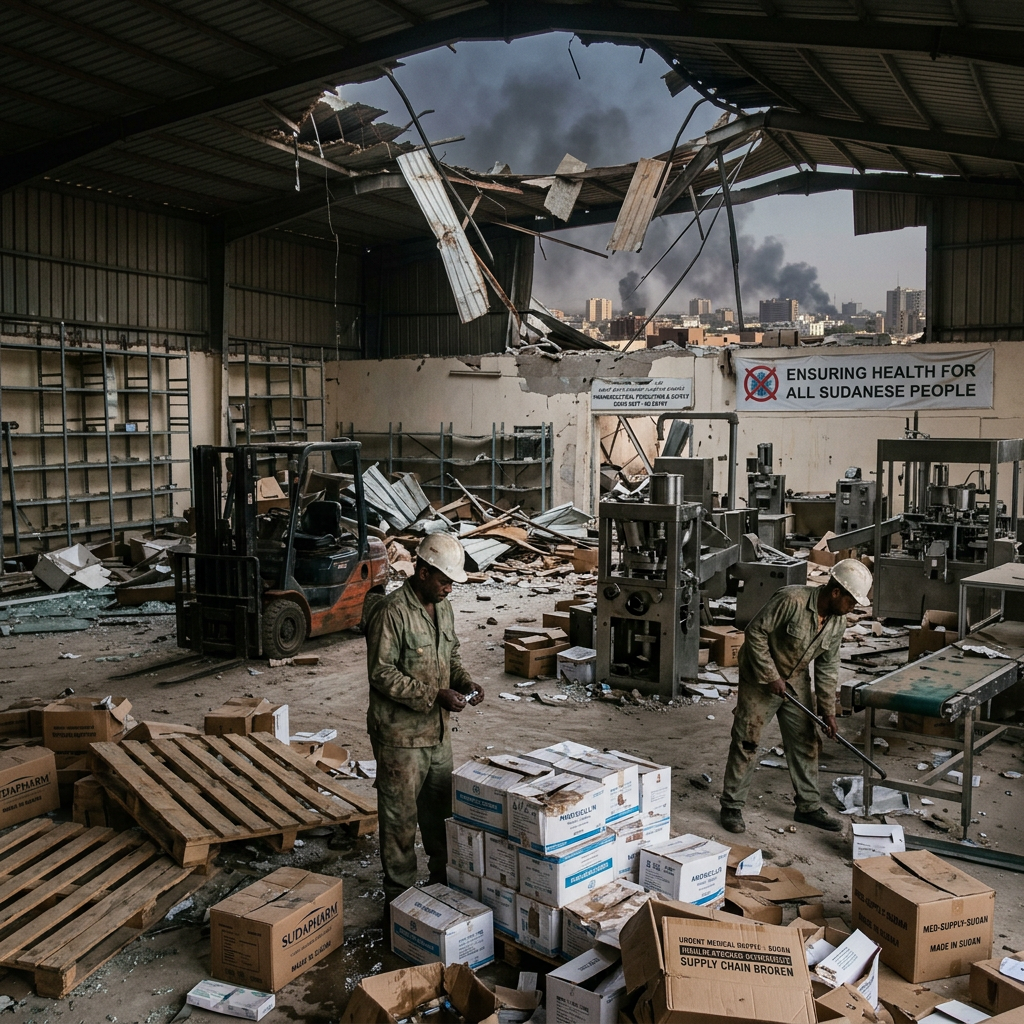
The war between the Sudanese Armed Forces and the Rapid Support Forces (RSF), which began in April 2023, has driven more than 14 million people from their homes , the world’s largest displacement crisis with death toll estimates ranging from 150,000 to over 400,000, though the true figure remains difficult to verify given conditions on the ground. A recent Al Jazeera report confirms that Sudan’s domestic pharmaceutical manufacturing had effectively ceased, strategic medicine stocks had collapsed to less than 20% of pre-war levels, and smuggling networks were filling the gap with temperature-ruined, potentially lethal drugs.
Figure 1: Global Medicine Market Spending, 2013–2027

1. Why Pharmaceutical Supply Chains Break Under Conflict
Pharmaceutical supply chains are unusually vulnerable to armed conflict for three structural reasons that distinguish them from most other industries.
First, production is geographically concentrated. As of 2024, India accounts for approximately 48% of all active API Drug Master Files (DMFs) globally, with China at 18%, the EU at 16%, and the US at 8%, according to the US Pharmacopeial Convention. For specific drug classes, the concentration is more extreme: 86% of streptomycin sold in North America and 96% of chloramphenicol sold in the EU come from China alone. India’s own pharmaceutical sector reflects the same dependency at a different level: approximately 80% of India’s bulk drug requirements are imported from China, converted domestically into consumable formulations tablets, capsules, syrups, injections and distributed under conditions that face their own infrastructure constraints. Indian manufacturers face fierce price competition from Chinese producers, and small and medium-scale companies in particular operate in a market environment that offers limited buffer against supply shocks. When conflict disrupts a producing geography whether at the API, formulation, or distribution level there is often no near-term substitute. Regulatory qualification of an alternative supplier takes 12 to 24 months under normal conditions.
Second, the industry relies on approved vendors. Unlike general manufacturing, a pharmaceutical company cannot simply switch a raw material supplier in response to a crisis. Every API source, every excipient, every packaging material must pass formal regulatory approval. The biggest challenge is the time required to introduce and approve a new supplier because of regulatory requirements. In Sudan, this proved fatal for supply continuity: when factories were occupied or destroyed, there was no rapid pivot available.
Third, pharma companies hold relatively high inventory by industry standards — a buffer that provides some insulation against short shocks. McKinsey Global Institute estimates the pharmaceutical industry will lose an average of 24% of one year’s EBITDA every decade to supply chain disruptions. But that estimate was modelled on cyberattacks and trade disputes — disruption categories where companies can respond and recover. Sustained military occupation of a country’s industrial capital, lasting years, is a different category of shock entirely. Supply chain resilience can be defined as an inherent operational efficiency that helps the supply chain absorb the impact of disruption and return to its functional state.
2. The Sudan Case: How War Dismantles an Industry
Before April 2023, Sudan had a small but functioning domestic pharmaceutical sector. Approximately 27 companies manufactured drugs, all concentrated in the Khartoum and Khartoum North industrial zones. Domestic manufacturing supplied roughly 30% of the country’s total pharmaceutical needs, focused on low-cost essential medicines including antibiotics (amoxicillin, metronidazole), analgesics (paracetamol), cardiac drugs, and diabetes treatments — medicines that are routine to produce but critical for patients with chronic conditions. Sudan’s National Medicines and Poison Board (NMPB) licensed 153 companies to manufacture, import, or supply pharmaceuticals, drawing from at least 30 countries on four continents. Table 1 sets out what the sector looked like before the war and where it stands now.
Table 1: Sudan Pharmaceutical Sector — Pre-War vs War-Period

2.1 Firm-Level Collapse: Three Companies in Khartoum
A 2025 study based on interviews conducted in March–May 2024 with manufacturers and distributors provides the most granular picture available. Three case studies illustrate how the same conflict event produced different failure modes across the supply chain.
Table 2: Firm-Level Impact — Three Sudanese Pharmaceutical Companies

What Table 2 captures is not just physical destruction but the collapse of every operational layer simultaneously: production, inventory, workforce, distribution, and credit. Company C’s situation illustrates the credit dimension that rarely surfaces in conflict-health literature. Because pharmacies and intermediaries who had taken on stock either closed or were looted, approximately $8 million in outstanding payments will likely never be recovered. Even if the company survives, the combination of devalued Sudanese pounds, 300% annual inflation, and unrecoverable receivables makes a return to pre-war capacity financially impossible without external recapitalisation.
2.2 What Fills the Void: Smuggled and Spoiled Medicines
The most dangerous consequence of supply collapse is not scarcity alone. It is what replaces regulated supply. Al Jazeera’s June 2026 field reporting from Omdurman documents the spread of ‘Boko’ medicines i.e unregulated drugs smuggled across borders, including critical intravenous malaria treatments. Because these drugs bypass temperature controls entirely during transit, they frequently arrive spoiled.
A UNFPA emergency report from August 2025 noted that the only functioning maternity hospital in the besieged city of el-Fasher faces critical medicine shortages and risks imminent closure — a data point that illustrates where supply chain collapse reaches its terminal point: not a drug shortage on a hospital shelf, but a hospital that cannot open.
3. Conflict and Pharma Supply Chains: A Pattern, Not an Anomaly
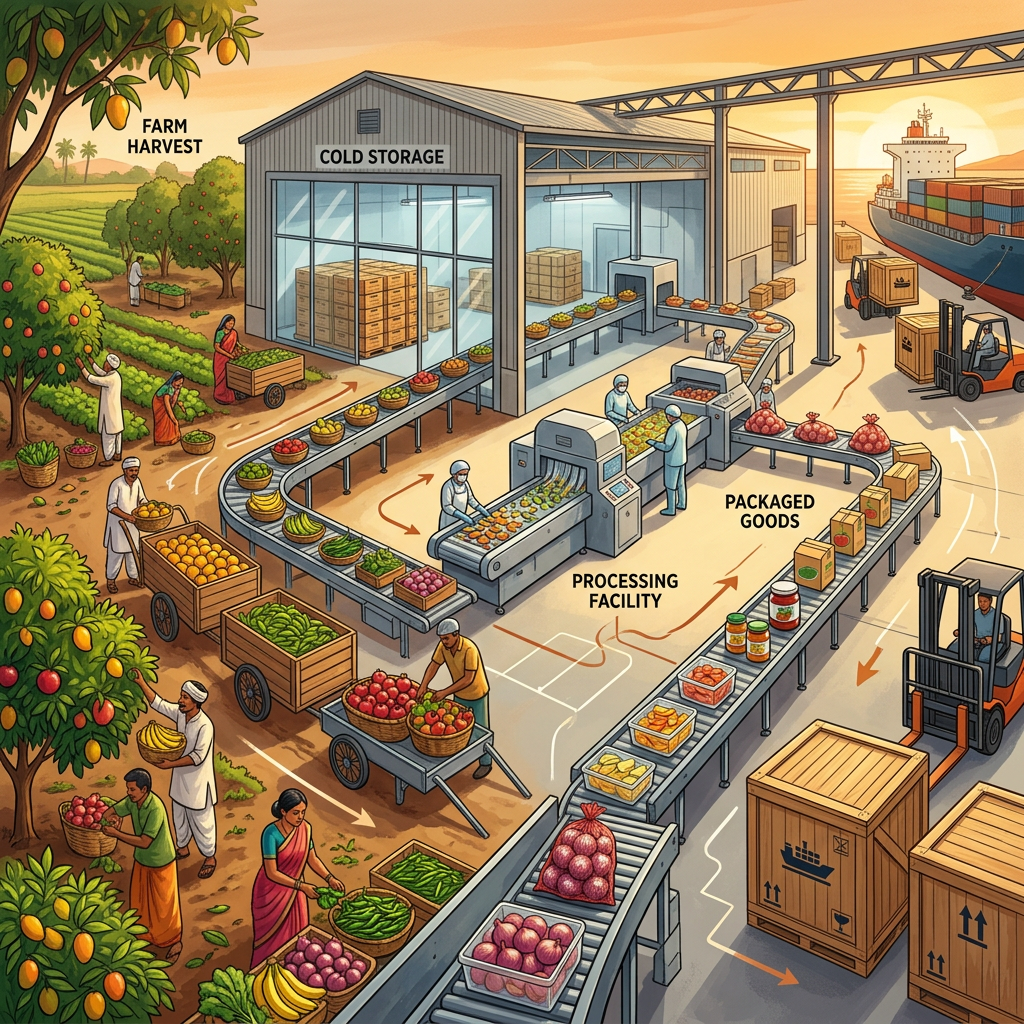
Figure 2: How Conflict Disrupts Pharmaceutical Supply Chains

Sudan is the most extreme current case, but it is not unique in kind. The global nature of the pharmaceutical supply chain means that disruptions in one region carry far-reaching effects on drug development, medicine availability, pricing, and industry operations. The Ukraine-Russia war provides a recent comparator across several of these dimensions simultaneously.
Ukraine had been a significant hub for pharmaceutical clinical trials, valued for its large patient pool, skilled investigators, and lower costs relative to Western Europe. Since the war began, hundreds of trials were disrupted or relocated as researchers and patients were forced to move and infrastructure was damaged. The loss is not only in the immediate research pipeline: investigator relationships and regulatory networks, once severed, take years to rebuild. Ukraine and Russia are also major producers of raw materials, including APIs and essential chemicals; trade restrictions and infrastructure destruction contributed to shortages of critical medicines, particularly generics and oncology drugs.
The cost pressures have been direct and measurable. The Ukraine-Russia war drove higher energy prices across the region, and in Europe which relies heavily on energy imports, generic drug manufacturers reported cost increases of 50–160% by 2022. Increased operational costs for pharmaceutical plants translate into higher drug prices for patients and healthcare systems, a transmission mechanism that is well-documented but rarely factored into conflict-risk assessments of the supply chain.
4. What Pharmaceutical Companies Can Do
Table 3: Resilience Strategies

Two of these strategies deserve emphasis because they are most consistently deferred in practice.
Dual sourcing is the measure most frequently recommended by supply chain professionals, but it carries upfront costs a second vendor relationship, split volumes that reduce efficiency, and the regulatory work of approval. Dual sourcing costs money. For India, where approximately 80% of bulk drug requirements are sourced from a single country, this is not a hypothetical risk, it is a structural exposure that leaves domestic manufacturers under the ongoing influence of shock propagation from any disruption to that supply relationship. The Sudan case provides the counter-argument in dollar terms: Company C’s $15.5 million inventory, wiped out in one conflict event, against the cost of pre-qualified backup sourcing that would have allowed the company to shift supply lines within weeks rather than ceasing operations.
Supply chain mapping is similarly underinvested. Before COVID-19, many pharmaceutical manufacturers had no visibility beyond their first-tier suppliers. In Sudan, the concentration of all 27 domestic manufacturers in a single urban industrial zone was a visible structural vulnerability that a supply chain map would have flagged. Whether that map would have prompted geographic diversification of manufacturing before the war is a harder question but without the map, the conversation cannot happen.
At the country level, broader structural measures can close some of the gap between supply chain vulnerability and resilience: industry-supportive government policies, manufacturing clusters, economic incentives, cold storage infrastructure, subsidies on refrigerated vehicles and air transportation of medicines, and the revival of public sector pharmaceutical production. These measures are particularly relevant for countries with high import dependency, where the demand-supply gap in medicine supplies cannot be closed through private sector action alone. The challenge lies not in identifying these interventions but in executing them before a crisis makes them urgent.
Conclusion
Sudan’s pharmaceutical sector collapse took roughly two months to move from functional to effectively non-existent. The physical infrastructure can be rebuilt; the workforce cannot be recalled on a timeline that matches the pace of destruction. Even if the war ends, the capacity of Sudan’s pharmaceutical industry to meet domestic need has been permanently weakened for the medium term, because damage to infrastructure, distribution systems, and specialized staff does not reverse quickly.
For pharmaceutical companies operating in or sourcing from politically volatile regions, the Sudan case offers a concrete set of questions: Where are your suppliers concentrated? What is your regulatory backup if a key API source becomes inaccessible? What is your inventory position for essential medicines if the distribution infrastructure collapses? How far beyond Tier 1 does your supply chain map extend?
The industry’s task is to ensure it does not replicate that absence at the company level in the next conflict zone. The industry has long optimised for efficiency. Sudan shows what the bill looks like when that model meets sustained armed conflict. The next conflict zone will send the same invoice — the only variable is whether the companies operating there will be in a position to pay it.
Author

Make Tatvita one of your preferred sources
See more insights from Tatvita Analysts in your Google Search results.

Leave a Reply