
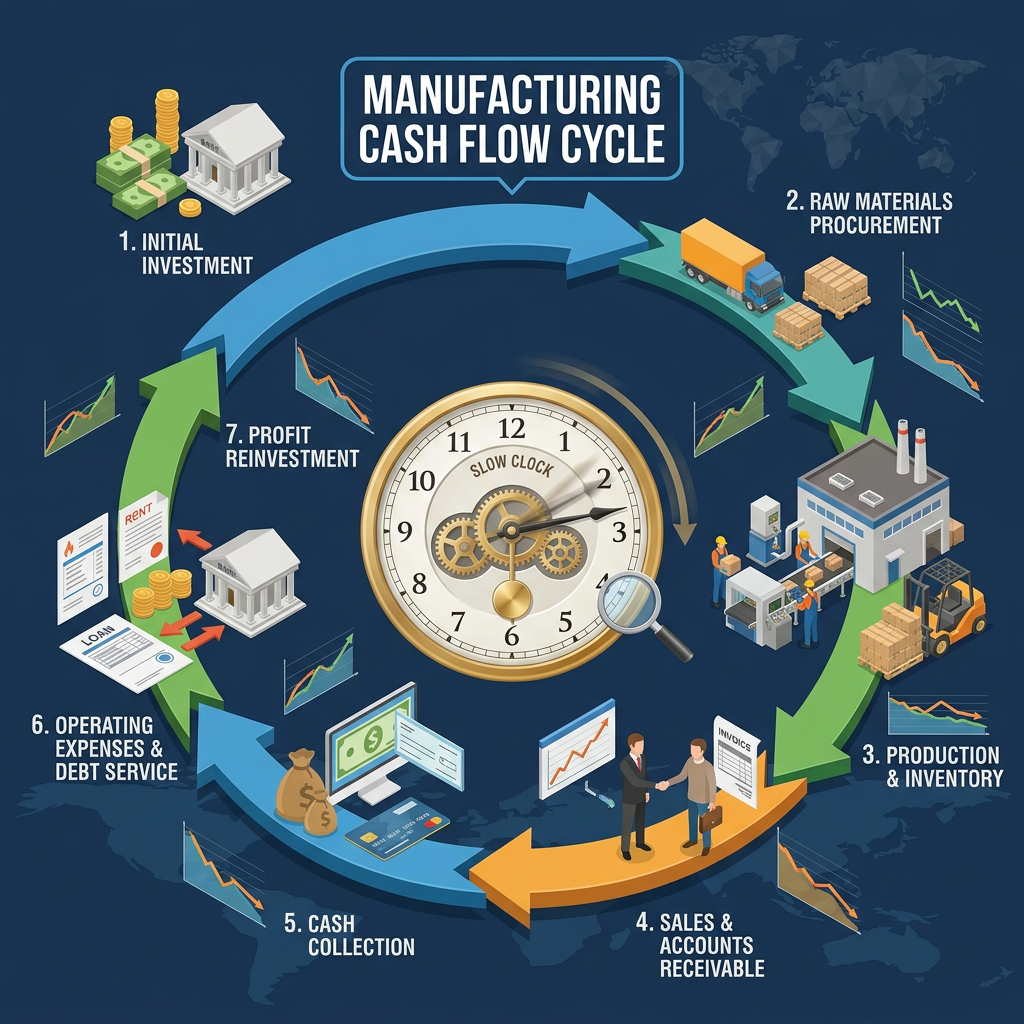
Across the world, Micro, Small and Medium Enterprises (MSMEs) form the backbone of economic activity. In India alone, MSMEs contribute nearly 30% of GDP, around 45% of exports, and support employment for millions across manufacturing, services, logistics, retail and digital sectors. Yet despite their importance, the single largest reason MSMEs fail is rarely poor products or lack of customers. The real problem is cash flow disruption. An MSME can be profitable on paper and still collapse operationally because: payments are delayed, inventory is locked, receivables rise faster than collections, input costs increase suddenly, or working capital cycles become unstable. The problem has become even more severe after: the COVID-19 pandemic, the Russia-Ukraine War, inflationary commodity cycles, rising logistics costs, and geopolitical supply-chain disruptions. India’s Economic Survey 2025–26 estimated that approximately ₹8.1 lakh crore remains stuck in delayed MSME payments, severely affecting liquidity and working capital cycles. This article analyses: why cash flow management is the real survival engine for MSMEs, how global MSMEs manage liquidity shocks, which industries face the highest cash stress, and what practical strategies businesses can adopt to improve resilience. Understanding Cash Flow: The Difference Between Profit and Survival One of the biggest misconceptions among small businesses is equating profit with liquidity. A business may: generate sales, record profits, and still face insolvency. This happens because cash flow depends on timing. The longer the delay between: production, invoicing, and actual payment collection, The greater the working capital pressure. This is why cash flow management is fundamentally about: […]
Unlock Full Access
Join thousands of Professionals
Who Rely on Tatvita for
research-backed intelligence
What You Get As A Member
Weekly Exclusive Articles
In Depth Analysis of critical issues
Monthly Research Reports
Data-rich reports across sectors and themes
Global Best practices platform
Lessons from leading countries and institutions
Business Intelligence
Industry insights and market research
Public Policy Insights
Evidence-based policy analysis and implications
Academic References
Citations, data sources and methodology
Latest Stories



How professionals see tatvita
“Our innovation team regularly reviews global practices before launching pilot projects. tatvita brings together examples that would otherwise require extensive searching”
“Useful whenever i need international examples for client presentations”
“the global case studies save me hours of searching before preparing lectures”
“A practical starting point for understanding how other countries have addressed similar challenges”
“One article often points me towards business ideas and strategies for exploring further”
“The reports provide context that is often missing from day-to-day business news”
“Helpful for exploring international approaches before beginning detailed research”
“The reports help connect global developments with India’s business environment”
“the articles helped me connect current affairs with economics and public policy in a way that standard textbooks rarely do”
“Tatvita gives me a good starting point while preparing assignments”