
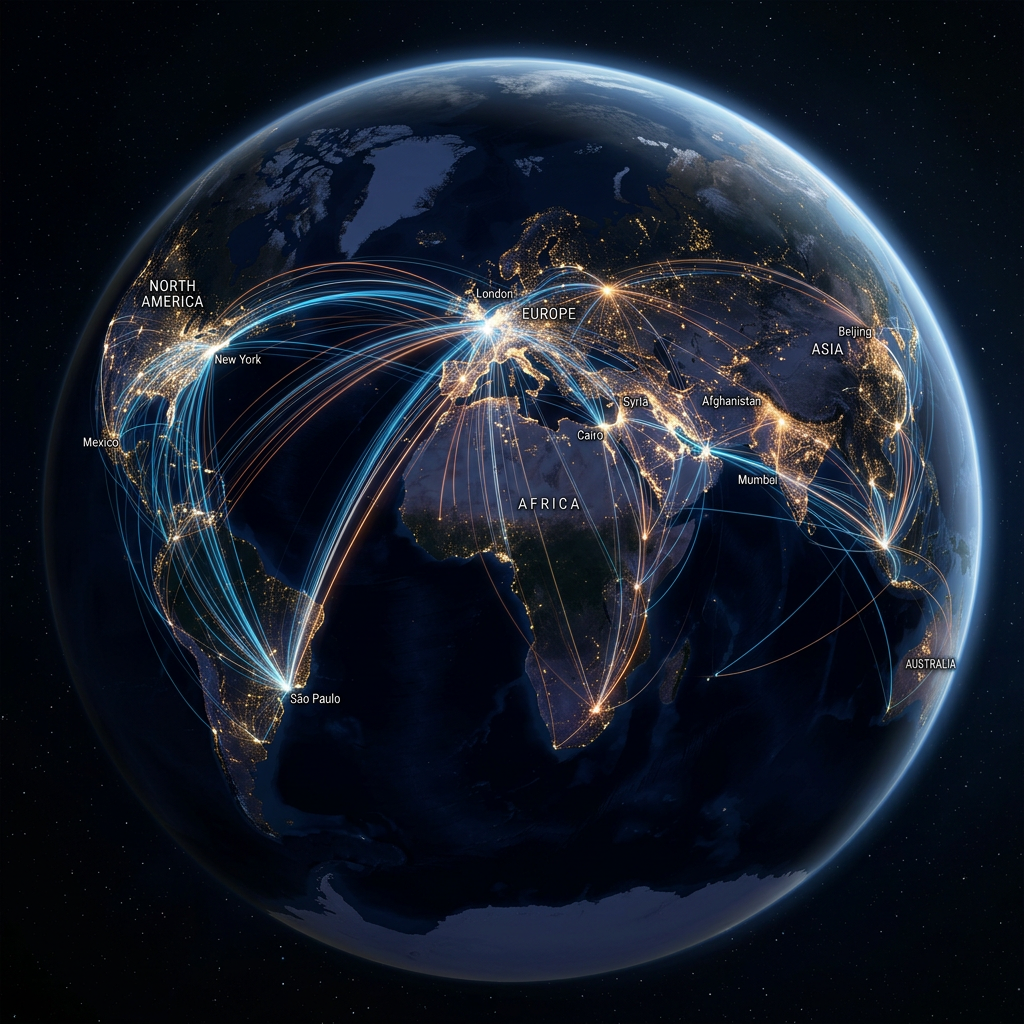
Migration has always been a part of human history, but wars transform migration from choice into compulsion. When conflict breaks out, movement is no longer about opportunity it becomes about survival. Today, the scale of forced migration is unprecedented. As per the latest estimates by the United Nations High Commissioner for Refugees, over 120 million people are forcibly displaced globally (2024–2025). This means that nearly 1 in every 67 people worldwide is displaced due to conflict, violence, or persecution. This represents a near doubling over the past decade, making conflict-driven migration one of the defining global challenges of the 21st century. This Tatvita flagship analysis explains how conflicts from World Wars to modern civil wars drive displacement, economic shifts, and long-term demographic transformation. Historical Evolution: Wars as Drivers of Migration War-driven migration has evolved across three major phases. 1. World Wars: Mass Displacement and State Reconfiguration The two World Wars marked the first large-scale global displacement: World War II alone displaced over 60 million people Redrawing of borders (Eastern Europe, Germany, Japan) led to permanent resettlement Creation of global refugee governance systems (e.g., 1951 Refugee Convention) These events established a foundational reality: migration is not a consequence of war it is one of its central outcomes. 2. Cold War Era: Ideological and Proxy Conflict Migration Post-1945 conflicts such as Vietnam, Afghanistan, and African civil wars created sustained refugee flows. Afghan conflict (1979–1989): ~6 million refugees Vietnam War: mass migration to the United States and Southeast Asia African conflicts: regional refugee […]
Unlock Full Access
Join thousands of Professionals
Who Rely on Tatvita for
research-backed intelligence
What You Get As A Member
Weekly Exclusive Articles
In Depth Analysis of critical issues
Monthly Research Reports
Data-rich reports across sectors and themes
Global Best practices platform
Lessons from leading countries and institutions
Business Intelligence
Industry insights and market research
Public Policy Insights
Evidence-based policy analysis and implications
Academic References
Citations, data sources and methodology
Latest Stories



How professionals see tatvita
“Our innovation team regularly reviews global practices before launching pilot projects. tatvita brings together examples that would otherwise require extensive searching”
“Useful whenever i need international examples for client presentations”
“the global case studies save me hours of searching before preparing lectures”
“A practical starting point for understanding how other countries have addressed similar challenges”
“One article often points me towards business ideas and strategies for exploring further”
“The reports provide context that is often missing from day-to-day business news”
“Helpful for exploring international approaches before beginning detailed research”
“The reports help connect global developments with India’s business environment”
“the articles helped me connect current affairs with economics and public policy in a way that standard textbooks rarely do”
“Tatvita gives me a good starting point while preparing assignments”