
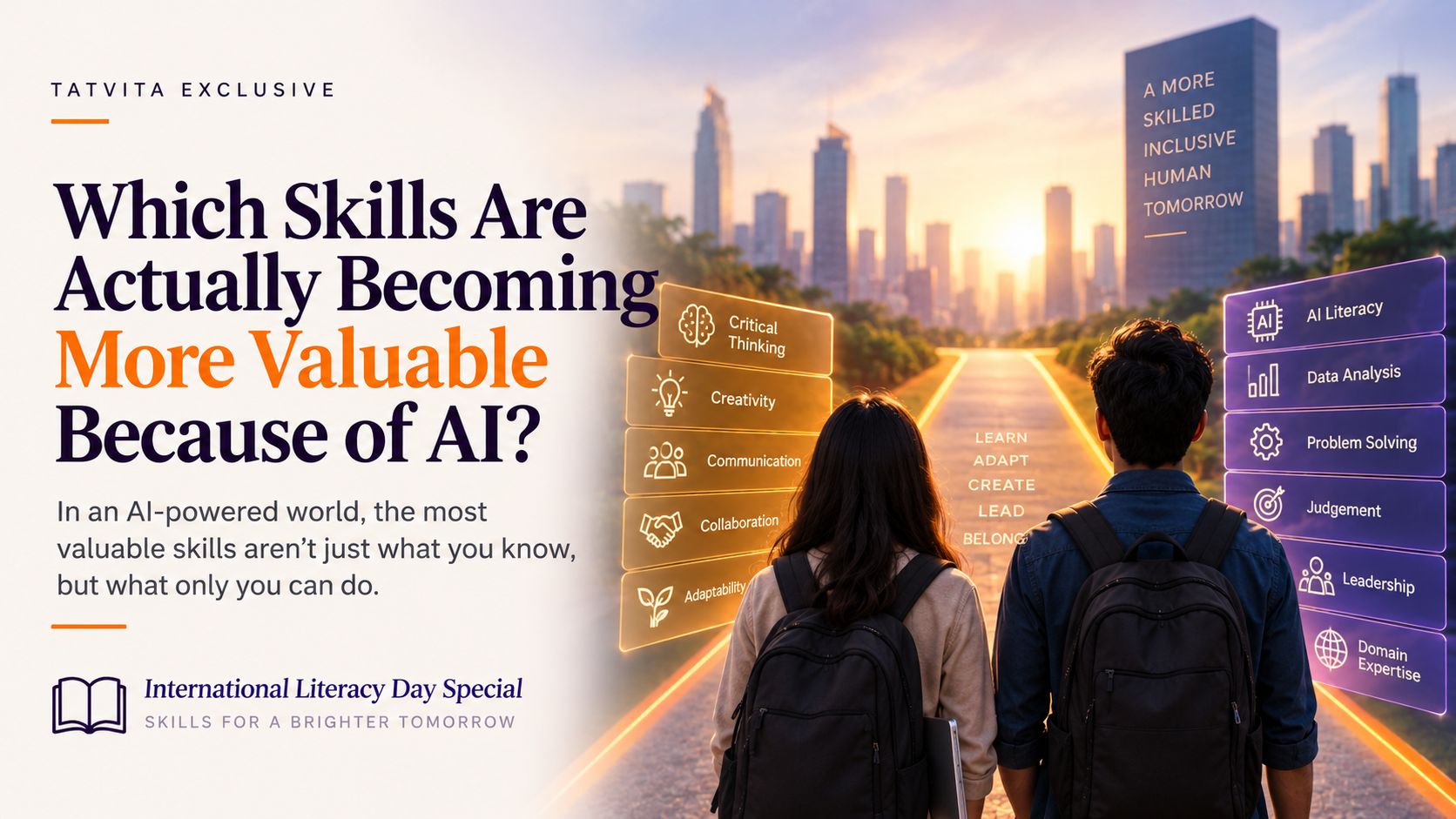
For years, the dominant question about artificial intelligence and employment has been: Which jobs will AI replace? For a student deciding what to learn, a young professional planning a career, or an experienced employee trying to remain relevant, there is a more useful question: Which skills are becoming more valuable because AI exists? The distinction matters. Artificial intelligence can already draft emails, summarise reports, generate computer code, analyse documents, create presentations, translate languages and produce images. Consequently, being able to produce a routine first draft, retrieve basic information or execute a standard cognitive task may no longer differentiate one worker from another as strongly as it once did. But that does not mean human skills are becoming irrelevant. Evidence emerging from labour markets suggests almost the opposite. AI is changing where human value lies. As machines become better at producing answers, value increasingly shifts towards people who can formulate the right problem, judge whether an answer is reliable, combine it with domain knowledge, make decisions under uncertainty, communicate those decisions and take responsibility for the outcome. This International Literacy Day, therefore, there is reason to reconsider what being “skilled” means in an AI-enabled economy. AI is Changing Tasks Faster Than It is Eliminating Entire Jobs The starting point is to distinguish a job from the tasks within a job. An accountant does not merely calculate numbers. A manager does not merely prepare presentations. A lawyer does not merely draft documents. A researcher does not merely find information. Each occupation consists […]
Unlock Full Access
Join thousands of Professionals
Who Rely on Tatvita for
research-backed intelligence
What You Get As A Member
Weekly Exclusive Articles
In Depth Analysis of critical issues
Monthly Research Reports
Data-rich reports across sectors and themes
Global Best practices platform
Lessons from leading countries and institutions
Business Intelligence
Industry insights and market research
Public Policy Insights
Evidence-based policy analysis and implications
Academic References
Citations, data sources and methodology
Latest Stories


How professionals see tatvita
“Our innovation team regularly reviews global practices before launching pilot projects. tatvita brings together examples that would otherwise require extensive searching”
“Useful whenever i need international examples for client presentations”
“the global case studies save me hours of searching before preparing lectures”
“A practical starting point for understanding how other countries have addressed similar challenges”
“One article often points me towards business ideas and strategies for exploring further”
“The reports provide context that is often missing from day-to-day business news”
“Helpful for exploring international approaches before beginning detailed research”
“The reports help connect global developments with India’s business environment”
“the articles helped me connect current affairs with economics and public policy in a way that standard textbooks rarely do”
“Tatvita gives me a good starting point while preparing assignments”