
The escalation of tensions between Iran, Israel, and the United States in early 2026 does not fit neatly into the traditional framework of victory and defeat. Rather than a decisive military outcome, the conflict reflects a broader pattern in modern warfare where limited strikes produce disproportionate and often unintended economic and geopolitical consequences.
Instead of stabilizing the region, the escalation has amplified uncertainty across critical global systems, particularly energy markets and trade routes. Key infrastructures remain vulnerable, regional tensions persist, and the absence of a clear political resolution suggests that the conflict has merely shifted form rather than concluded.
From an economic perspective, the more relevant question is not who gained militarily, but who absorbs the long-term costs of sustained instability. In this sense, the aftermath of the conflict points less toward resolution and more toward a prolonged period of structural disruption in the global economy.
1. The Gulf Economies: Hidden Casualties of the Conflict
Although Iran was the primary target, the economic fallout has disproportionately affected the Gulf Cooperation Council (GCC) countries. The Strait of Hormuz, which facilitates a significant share of global oil and gas trade, has become increasingly unstable not fully closed, but no longer secure.This has created what can be described as a “gray-zone disruption”, where uncertainty rather than complete blockade drives economic damage.
Water Insecurity and Infrastructure Vulnerability
One of the most overlooked consequences is the vulnerability of desalination infrastructure. Countries such as Qatar and Bahrain depend on desalination for over 90% of their freshwater supply. Retaliatory strikes on such facilities have transformed the conflict into a humanitarian risk.
From an economics standpoint, this highlights the fragility of resource-dependent systems. When essential goods like water are tied to centralized infrastructure, they become high-risk targets during conflict.
Labour Flight and Economic Slowdown
Another key issue is the expatriate exodus. The Gulf economies rely heavily on foreign professionals, particularly from India and Western countries. Rising insecurity has led to a decline in skilled labour availability, which directly affects productivity and service sectors.
As a result:
- GDP growth in the GCC is projected to fall sharply
- Investment inflows are slowing due to geopolitical risk
- Oil prices have surged beyond sustainable levels
While higher oil prices may seem beneficial, they also increase global inflation, reduce demand, and create long-term instability.

2. The “Power Vacuum Paradox” in Iran
The removal of Iran’s Supreme Leader was intended to weaken the regime. Instead, it has created what can be called a power vacuum paradox ,where eliminating central authority increases instability rather than reducing it.The rise of Mojtaba Khamenei has not consolidated control. Instead, power appears fragmented, especially within the Islamic Revolutionary Guard Corps (IRGC).
Risk of State Fragmentation
The bigger concern is not a hostile Iran, but a failed Iran. A collapse of central authority could trigger:
- Ethnic insurgencies (Kurdish, Baloch regions)
- Spillover instability into neighbouring countries
- A large-scale refugee crisis
From a demographic perspective, even if 10% of Iran’s population migrates, it would result in millions of refugees placing enormous pressure on Europe and surrounding regions. This reflects a key economic concept: political instability increases transaction costs globally, affecting trade, migration, and security expenditure.
The Economics of Modern Warfare: The Attrition Trap
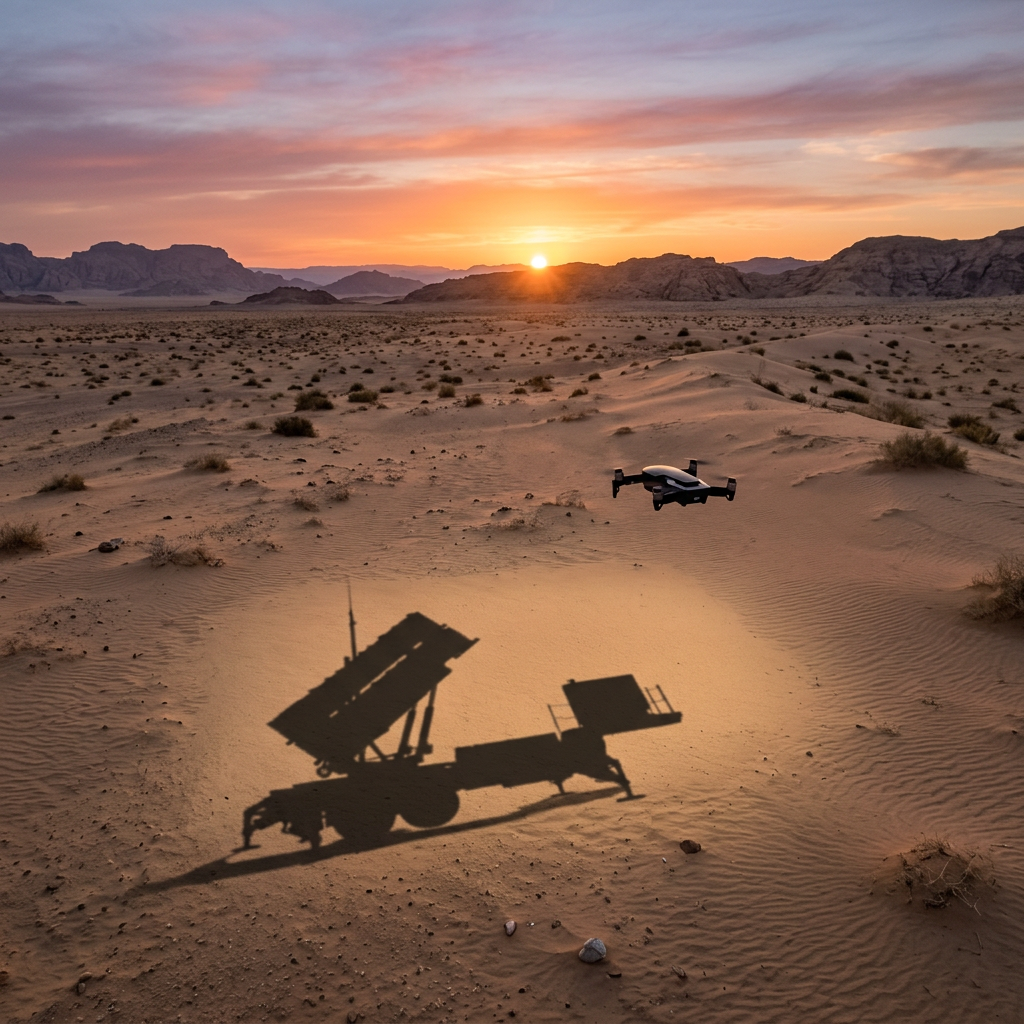
One of the most striking insights from the conflict is the cost asymmetry in modern warfare. Iran and its allied groups have relied heavily on low-cost drone technology, such as the Shahed-136, which costs around $20,000 per unit. In contrast, defensive systems like U.S. Patriot missiles cost millions per interception.
Cost Imbalance
This creates a classic economic inefficiency:
- Low-cost offensive weapons
- High-cost defensive responses
This imbalance forces the defending country into an attrition trap, where sustaining defense becomes financially unsustainable over time.
Fiscal Implications
The conflict has already resulted in extremely high daily expenditures for the U.S., estimated at billions per day. Over the long term, this could accumulate into a trillion-dollar burden. For an economics student, this resembles a negative return on investment (ROI) scenario where the cost of maintaining security exceeds the economic benefits of intervention.
Indirect Beneficiaries: Russia and China
While the conflict has destabilized the Middle East, it has simultaneously created opportunities for other global powers.
Russia’s Economic Gain
Due to disruptions in global energy supply, there has been pressure to ease restrictions on Russian oil exports. This has effectively increased Russia’s revenue, indirectly supporting its ongoing geopolitical ambitions.This shows how sanctions effectiveness can weaken under global supply shocks.
China’s Strategic Advantage
At the same time, U.S. military resources have been diverted toward the Middle East. This reduces its presence in the Indo-Pacific region, which is strategically important for China.
From a game theory perspective:
- The U.S. is facing strategic overextension
- China benefits without direct involvement
This aligns with the concept of opportunity cost resources used in one region reduce effectiveness in another.
The Limits of Military Deterrence
The conflict highlights a critical limitation: military success does not guarantee political stability.The current approach can be described as “deterrence without occupation” where military strikes are used to weaken an adversary, but no effort is made to rebuild governance structures.
Institutional Vacuum
Without strong institutions:
- Power fragmentation increases
- Non-state actors gain influence
- Long-term instability becomes likely
Economic theory emphasizes the importance of institutions in development. Without them, even resource-rich countries struggle to maintain stability.
Conclusion: The True Cost of a “Quick War”
The 2026 Iran conflict demonstrates that modern warfare cannot be evaluated purely through immediate outcomes. While Operation Epic Fury achieved tactical success, its broader consequences suggest a deeper strategic failure.
From an economic perspective, the conflict has:
- Disrupted global energy markets
- Increased fiscal burdens on major powers
- Created humanitarian and migration risks
- Strengthened rival geopolitical actors
Most importantly, it reinforces a key insight:
In an interconnected global economy, no conflict remains localized.
What was intended as a limited military operation has evolved into a multi-dimensional crisis affecting trade, security, and global stability. The ceasefire in April 2026 may appear to signal an end, but in reality, it marks the beginning of a prolonged period of uncertainty.
For policymakers, the lesson is clear short-term military gains must always be evaluated against long-term economic and strategic costs. Without this balance, tactical victories risk becoming strategic liabilities.
Author

Make Tatvita one of your preferred sources
See more insights from Tatvita Analysts in your Google Search results.



Leave a Reply