
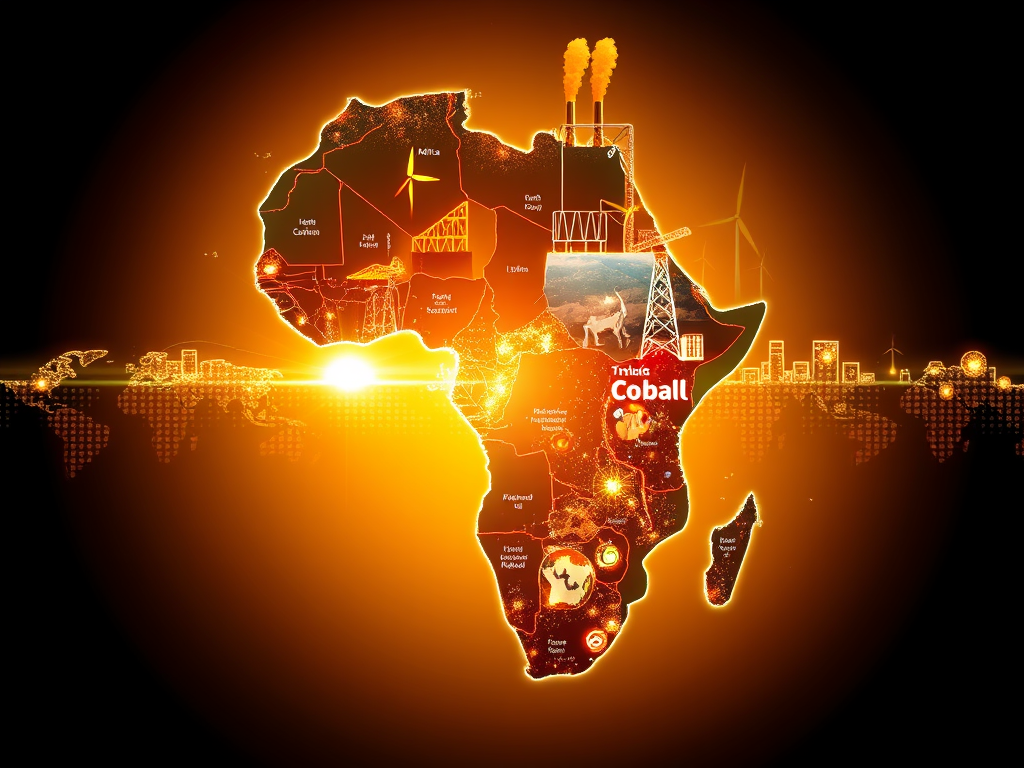
As the global economy increasingly becomes interconnected and vulnerable to disruption, Africa is gradually becoming a central player in how global supply chains are changing. Historically viewed as a continent with abundant natural resources but not much industrial infrastructure, Africa is now excluding itself as an integral player in worldwide production, resource extraction and manufacturing.
Driven by a mix of resource wealth, increasing industrialization and technological advances, Africa is not only providing raw materials, but is now commensurate with a key hub for production and technology-driven innovations that feed into the global provision networks.
Africa’s Resource Wealth: The Cornerstone of Global Supply Chains
One of the most important factors ratcheting up the importance of Africa in global supply chains is its huge natural resource base. The continent is home to some of the most critical minerals and energy sources that are essential to various global industries. Africa has long had the reputation for being a resource-rich continent, but now, Africa’s resource endowment, both mineral and energy, is becoming increasingly important as the world moves to new, high technology and low carbon technologies.
Key Resources Propelling Global Demand Cobalt:
- Cobalt: Africa, and especially the Democratic Republic of Congo (DRC), is a key supplier of cobalt which is a critical material used in the production of electric vehicle (EV) batteries.The trend towards cleaner energy and the rise of EVs has made cobalt is indispensable.
- Lithium: Thisis another important ingredient in battery production. The continent of Africa is emerging as key producers, with Zimbabwe and Zambia standing out, further cementing Africa’s place in the clean energy transition.
- Platinum and Gold: South Africa’s platinum group metals (PGMs) are still required in the catalytic converters of cars and in hydrogen-fueled cells and it is still one of the leading gold producers worldwide.
- Oil and Gas: While the continent’s dependence on fossil fuels slowly falls in certain parts of Africa, oil and natural gas resources, especially of places such as Nigeria and Angola, are essential for world energy consumption.
As global markets increasingly demand for these materials, whether for green technologies, consumer electronics or automotive manufacturing, the resource base in Africa will continue to be key to global markets. This strategic resource wealth gives Africa a great deal of leverage, especially as industries such as electric vehicles, renewable energy and high-tech continue to grow on the international stage.
Africa’s Emerging Sector
Africa’s manufacturing industry has long been a topic of interest in discussions of economic growth, and today it is emerging from a simple resource exporter to a more complex producer centre. The rising demand for finished goods, Africa’s current favourable labour costs, and its strategic location make the continent an attractive alternative to other regions, such as Asia, for global production.
- Competitive Labour and Increasing Manufacturing Capacity: Africa has one of the shortest labour costs in the world, particularly when compared to the labour costs of other parts of the world, such as Asia and Latin America. As global companies search for ways to minimise the cost and still stay competitive in production quality, the continent is an ideal alternative for securing a source for labour-intensive goods, especially those from industries like automotive, textiles, electronics, and consumer goods. Moreover, Africa’s strategic position – with ports both on the Indian Ocean and Atlantic Ocean – means that it is a key player in global logistics and trade. The continent is a natural gateway between the East and West and links key markets in Asia, Europe and the Americas. This positioning provides an opportunity for businesses to optimise their supply chains to reduce costs and delivery times.
- Infrastructure Development: Developing Manufacturing Capabilities : A key factor in how well Africa is able to come forward as a hub for manufacturing is the continent’s growing infrastructure. Several African governments have introduced programs to upgrade their energy grids, transportation networks and port facilities. These efforts are aimed at making it easier to implement and less logistically challenging for Africa to stimulate its manufacturing expansion. For instance, automobile manufacturing and electronics assembly are increasing in the economies of Kenya, Nigeria and Ethiopia, which have attracted global companies’ investment. Additionally, as countries step up investments in renewable energy, they are positioning themselves as a hub for clean energy production, with the solar and wind energy sectors becoming increasingly competitive.
Africa’s projections for manufacturing growth are positive, with countries like Ethiopia and Kenya rapidly building industrial areas dedicated to automobile production and textilemanufacturing among others.
Technology and Innovation: Enhancing Digital Supply Chain Integration
Africa’s tech sector is getting ever more influential in supply chains across the world. As the continent undergoes digital transformation, a number of innovations are playing an important role in making African markets accessible to the global economy. From FinTech, agri-tech to e-commerce, Africa is playing a key role in the digital economy.
- Financial Technologies and Digital Payments : One of Africa’s most important tech success stories has been Africa’s mobile payment innovations. M-Pesa has been launched in Kenya, revolutionizing the way in which people all across Africa engage in financial transactions, allowing millions of people to engage in the digital economy without access to traditional banking. This financial inclusion has improved the trade and commerce in the continent and made it easier for businesses to set up in the continent of Africa.
- E-Commerce and the Digital Infrastructure: E-commerce has experienced an explosive growth in Africa. Companies such as Jumia in Nigeria and Takealot in South Africa are linking African consumers to global markets, making it easier to buy goods and services, and developing the logistics network on the continent. The digital infrastructure in Africa is rapidly improving with new data centres, cloud computing and blockchain technology making supply chains far more efficient, especially in sectors like agriculture, energy and retail.
- Agri-Tech: Enhancing Agricultural Supply Chain: Agriculture is a vital part of Africa’s economic structure, and its agricultural sector is changing the way we produce and distribute food. Agri-tech startups in countries such as Kenya, Nigeria and South Africa are finding uses for technology to improve food security, improve crop yield and optimise logistics. Technologies such as blockchain are being leveraged to guarantee supply chain transparency, food waste reduction, and an efficient trade network.
Trade Integration: Africa Strategic Partnership and Economic Integration
The African Continental Free Trade Area (AfCFTA), which took effect in 2021, has already started to prime Africa’s position in global trade. This trade agreement aims to establish a single market for goods and services among 54 African nations that would allow for greater economic integration and further increase intra-African trade.
The AfCFTA’s Effect on the Trade Dynamics of Africa: AfCFTA is expected to increase intra-Africa trade by 20% in 2030, which will enable African countries to trade more freely and efficiently with each other. The agreement will:
- Boost access to African markets for businesses across the continent.
- Increase in foreign direct investment (FDI) as investors get access to the single market of 1.3 billion people.
- Facilitate the building of regional value chains and minimise dependency on imports from non-African countries;
Strategic Changes in Supply Chain Risk Management
As global businesses are looking to diversify supply chains in order to avoid dependence on a handful of regions, Africa is an important alternative. The movement away from Asia and Europe to Africa is being caused by a number of factors:
- Resource diversification: With Africa’s wealth of minerals, it is well positioned to wean itself from a reliance on China and other suppliers for such critical resources as cobalt, lithium, and platinum.
- Competitive manufacturing: Africa’s low cost labor and emerging industrial capacity make it a perfect destination for cost-efficient manufacturing in sectors like automotive, electronics, and consumer goods.
- Geopolitical stability: Compared to other parts of the world with abundant natural resources, many African countries have a relatively stable political environment, especially in Southern and Eastern Africa.
By investing in Africa, businesses can reduce risks associated with concentrated supply chains and guarantee access to important resources, manufacturing capacity, and new technologies.
Conclusion
Africa’s strategic importance in the global supply chains is increasing. The continent’s abundance of natural resources, booming manufacturing base and emerging tech cluster is making it an increasingly appealing partner for businesses looking to grow their supply chain to diversify and lower risk. With initiatives such as the AfCFTA helping to further support economic integration, digital infrastructure becoming accessible to global trade access, and resource wealth that funds the raw materials required to achieve the green energy transition, Africa’s position in global trade will continue to expand.
As businesses worldwide search for resiliency and diversification in their supply chains, Africa is in a good place to offer them safe, sustainable and efficient solutions. With consistent investment into infrastructure, technology and trade partnerships, it’s not only one that provides flashy natural resources, but Africa is also increasingly becoming the frontrunner of manufacturing and supply chain innovation far beyond as well paving the way of Africa’s global trade and future leadership.



Leave a Reply