
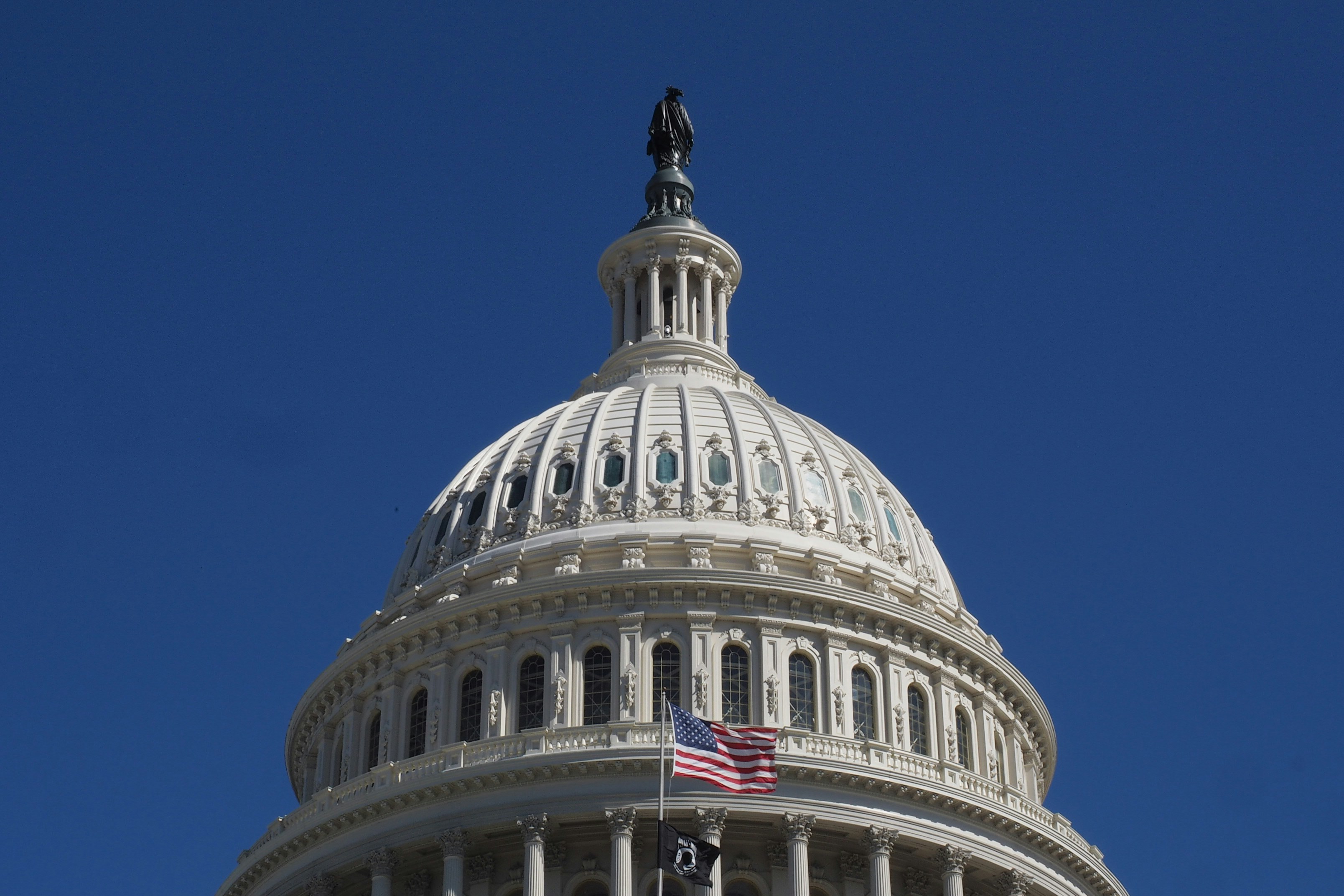
The United States has long viewed defense policy as the bedrock of its national strategy defining its global posture, alliance structure, and the balance of power that underpins international stability. In 2024, the U.S. Department of Defense (DoD) operated with an unprecedented budget of over $850 billion, larger than the next ten nations combined. This colossal spending sustains unmatched military reach, a global network of bases, and alliances stretching from NATO in Europe to AUKUS and the Quad in the Indo-Pacific.
Yet, the post-9/11 era of counter-terrorism dominance has ended. The 2022 National Defense Strategy explicitly identifies China as the “pacing challenge” the benchmark against which U.S. capabilities are measured and Russia as an immediate threat. This reorientation demands a complex recalibration: from resource allocation and technology investment to alliance diplomacy and public consensus.
A PESTEL analysis examining Political, Economic, Social, Technological, Environmental, and Legal dimensions reveals how the U.S. is redefining its defense architecture amid fiscal constraints, societal fatigue, and rapid technological change.
Background: The World’s Largest Defense System
The United States’ defense system dwarfs all others in both scale and structure. It accounts for roughly one-third of global military spending, employs millions across its industrial base, and fuels research that later spills into civilian innovation. Its annual National Defense Authorization Act (NDAA) sets spending levels and priorities, reflecting a constant tug-of-war between Congress, the Pentagon, and political ideology.
Globally, the U.S. sustains the most extensive alliance network in history. From the North Atlantic Treaty Organization (NATO) to Indo-Pacific pacts such as AUKUS and the Quad, its defense policy serves not only national security but the maintenance of a rules-based international order.
However, the architecture faces new vulnerabilities: ballooning debt, rising modernization costs, pandemic-era supply chain fragility, and public exhaustion after two decades of foreign wars. America’s capacity to sustain global pre-eminence now hinges on its ability to adapt.
Political Factors: Power, Partisanship, and Policy Direction
U.S. defense policy is deeply political. It rests on bipartisan consensus that military superiority ensures deterrence, yet sharp divisions persist over how to maintain it. Each year, Congress debates the NDAA—balancing traditional readiness spending with investments in AI, cyber warfare, and hypersonic weapons.
The 2022 National Defense Strategy redirected focus toward great-power competition, calling for “integrated deterrence” the alignment of diplomacy, economics, and technology with military might. However, domestic politics complicate implementation. Public “war fatigue”, amplified after the Afghanistan withdrawal (2021), pressures policymakers to minimize overseas commitments even as global crises from Ukraine to the Taiwan Strait demand engagement.
The defense industrial base, spread across every U.S. state, also wields political influence, lobbying for major programs that sustain local jobs and congressional support. Thus, defense policy is as much about domestic political economy as it is about strategy.
Economic Factors: The Cost of Global Leadership
At over $850 billion, U.S. defense spending fuels a vast industrial-technological ecosystem and millions of jobs. Yet it also faces economic headwinds: soaring national debt, fiscal deficits, and inflationary pressures that complicate long-term modernization.
Major investments next-generation fighter jets, nuclear modernization, space infrastructure, and cyber capabilities—demand decades of funding. Supply-chain fragility, exposed during COVID-19 and the Ukraine conflict, has revealed overreliance on imported microchips and rare-earth minerals, prompting a push for reshoring and allied co-production under initiatives like AUKUS Pillar II.
Meanwhile, the U.S. remains the world’s largest arms exporter, using foreign military sales to strengthen alliances and sustain its domestic industry. But critics argue that these exports can perpetuate regional tensions. The enduring challenge is to sustain global leadership without breaching fiscal limits a balance between strategy and solvency.
Social Factors: Society, Service, and Civil–Military Relations
Public sentiment has always shaped America’s military posture. After decades of interventions, the public’s tolerance for “forever wars” has waned, though support for a strong military remains robust making defense one of the few institutions Americans still broadly trust.
The all-volunteer force, established in 1973, now faces recruitment shortfalls. In 2023, the armed services collectively missed targets by over 41,000 recruits, constrained by shrinking eligibility pools, fitness issues, and shifting career aspirations.
At the same time, the military is adapting to social expectations around diversity, inclusion, and ethics from integrating women and LGBTQ+ personnel to ensuring transparency over drone operations and civilian casualties. Veterans’ welfare covering healthcare, PTSD treatment, and job reintegration remains both a moral obligation and a measure of societal trust in the defense establishment.
These social factors underline a central truth: America’s military strength ultimately depends not just on budgets, but on public legitimacy and human capital.
Technological Factors: Innovation as Deterrence
Technology remains the decisive edge of U.S. power and its most competitive frontier. The Pentagon’s focus has shifted to Artificial Intelligence (AI), autonomous systems, hypersonic weapons, cyber warfare, and space operations.
Through initiatives like Project Maven, the DoD is embedding AI into intelligence, surveillance, and decision-making. The establishment of the U.S. Space Force (2019) reflects a recognition that orbit is the new arena of power competition critical for communications, navigation, and missile warning.
However, rapid innovation comes with challenges: cost overruns, procurement delays (notably in the F-35 program), and growing parity from competitors like China. Close collaboration between the Pentagon, Silicon Valley, and major defense firms continues to drive progress, but also raises ethical debates over the militarization of emerging technologies.
In short, U.S. deterrence increasingly depends on digital superiority as much as on traditional arms.
Environmental Factors: Climate as a Security Multiplier
Few institutions feel the impact of climate change as acutely as the U.S. military. With over 800 global bases, rising seas, wildfires, and extreme heat pose direct threats to infrastructure and readiness. The Pentagon now treats climate change as a “threat multiplier” a factor that amplifies conflict and operational risk.
Naval facilities like Norfolk Naval Base face costly flood mitigation efforts, while Arctic warming is opening new strategic sea routes that demand expanded surveillance and presence.
To reduce energy vulnerabilities, the DoD is investing in microgrids, on-site renewable power, and electrified vehicles through its Climate Adaptation Plan 2023. Environmental performance also influences host-nation relations, with cleanup programs and sustainability standards crucial for retaining base access and goodwill.
Climate resilience is no longer a peripheral concern—it is a pillar of defense readiness.
Legal Factors: Authority, Accountability, and New Domains
U.S. defense operates under a complex legal architecture balancing presidential authority and congressional oversight. The War Powers Resolution (1973) limits the President’s ability to deploy forces without congressional approval, though successive administrations have tested its scope.
Each year’s NDAA sets budgetary authority, while the Posse Comitatus Act restricts military involvement in domestic law enforcement. Internationally, obligations under NATO Article 5 and Article 51 of the UN Charter (self-defense) guide coalition operations.
Legal compliance with the Law of Armed Conflict (LOAC) and International Humanitarian Law is critical to legitimacy, though controversies over drone strikes, detentions, and cyber operations continue to test boundaries. Emerging domains like space and cyberspace remain legally grey, forcing the U.S. to both shape and navigate evolving norms.
Cross-Factor Insights
Every pillar of the PESTEL analysis interacts dynamically:
- Political strategy (competition with China) drives technological acceleration, which in turn strains economic sustainability.
- Industrial supply-chain health is now a matter of national security, blending economic and legal imperatives.
- Social legitimacy—trust, inclusion, and ethical conduct—remains foundational for maintaining defense spending and recruitment.
- Climate risk has become an operational variable, shaping base design and overseas posture.
- Legal ambiguity in cyber and space creates strategic instability, demanding new norms even as competition intensifies.
The challenge is not merely military—it is systemic: aligning America’s economic capacity, technological ambition, and social will with its global commitments.
Conclusion: Sustaining Power Through Balance
The United States remains the most powerful military actor in history. But sustaining that power in the age of multipolar rivalry requires balancing innovation with restraint, leadership with legitimacy, and strategy with sustainability.
To thrive in this new era, U.S. defense policy must:
- Invest smartly prioritising transformative technologies while avoiding unsustainable cost spirals.
- Fortify alliances through co-production, intelligence sharing, and industrial integration.
- Build climate-resilient bases that secure readiness under changing conditions.
- Strengthen the human dimension through inclusive recruitment, family support, and veteran welfare.
- Shape global norms in AI, cyber, and space before adversaries do.
Ultimately, America’s military strength will depend not just on its arsenal, but on its ability to align power with purpose and adapt its grand strategy to a world it can no longer dominate by force alone.
Policy Takeaways
- The U.S. is pivoting from counterterrorism to strategic competition, prioritizing China and Russia under the 2022 National Defense Strategy.
- Fiscal constraints and supply-chain vulnerabilities are testing the long-term sustainability of the $850 billion budget.
- Recruitment challenges and social expectations are reshaping the all-volunteer force.
- Climate resilience and energy innovation have become integral to readiness.
- Legal grey zones in cyber and space demand urgent international norm-setting.
Author

Make Tatvita one of your preferred sources
See more insights from Tatvita Analysts in your Google Search results.


Leave a Reply