
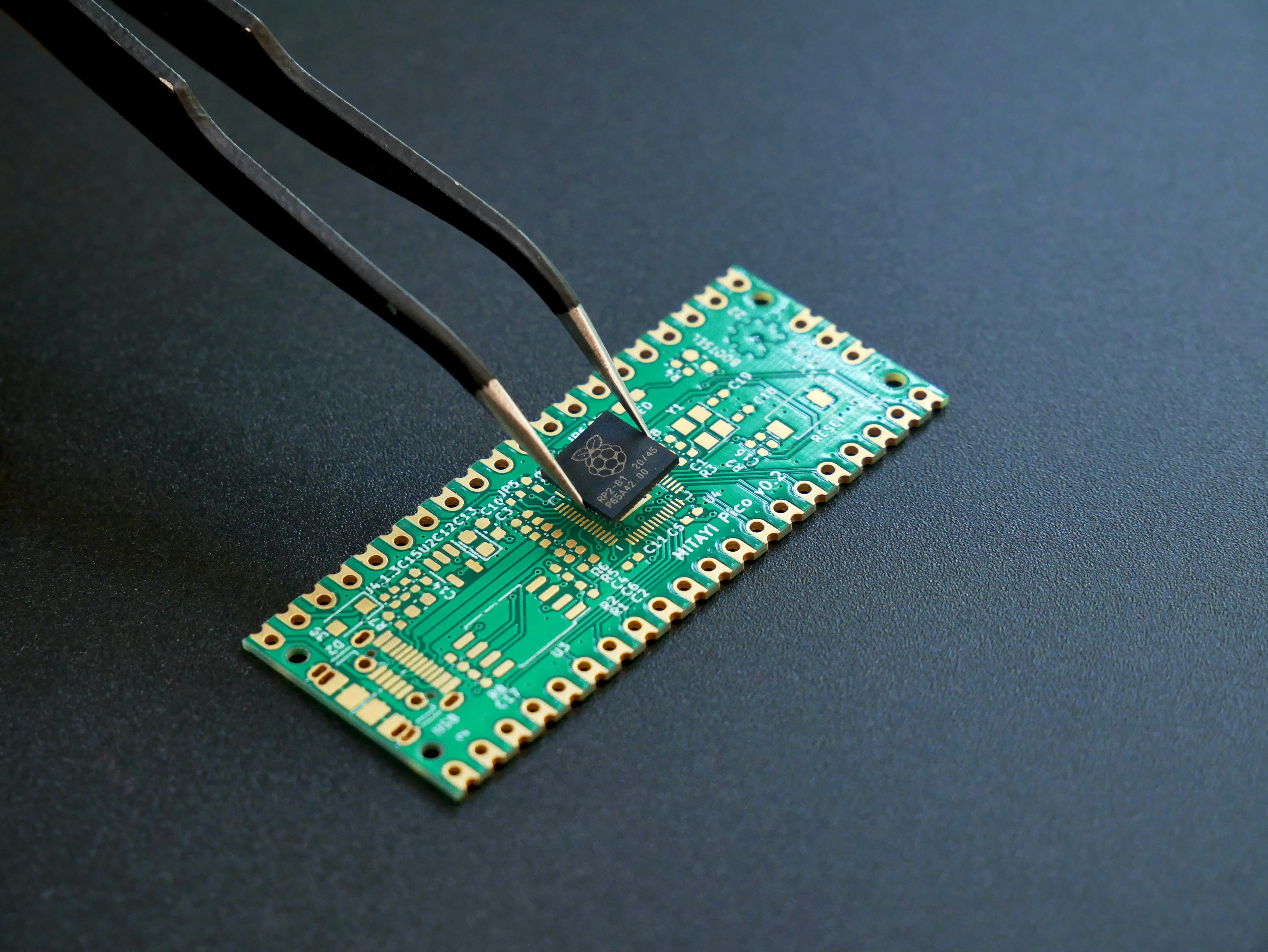
Semiconductors are unarguably the arc reactor of the technology-driven world we call home today. Hence, it goes without saying that any nation that can harness the manufacturing capabilities of semiconductors will position itself as a major influence in geopolitics and global progress. They power virtually all lifelines of the economy- transport, communications and the internet.
The advent of AI and the global race to reach the pinnacle of AI development has seen major superpowers such as the USA and China invest heavily in the semiconductor industry, which is currently heavily dominated by Taiwan.
COVID-19, however, saw a crunch in the global supply of semiconductors, which spurred India to look at this field as a potential driver of new-age growth and development. The Government of India, in the past three years, have seen the develop this field in what appears to be leaps and bounds.
While sources vary on the exact number, analysts agree that Taiwan Semiconductor Manufacturing Company (TSMC), the world’s largest semiconductor foundry, held over 61% of the global market share in semiconductor manufacturing (as of 2023), a number that has increased to approximately 70% in early 2024. Taiwan, thus, has a disproportionately significant influence on global semiconductor supply.
Currently valued at USD 38 bn, the Indian semiconductor industry contributes to less than 1% of the total market share, making the goal of reaching USD 109 bn by 2030, seem like a rather far-fetched one at first glance. However, the government has been making significant strides in setting action to promise, under the banner of the Indian Semiconductor Mission (ISM).
Launched in 2022 under the Digital India Corporation, the aim of the ISM is to realise the goal of a robust semiconductor manufacturing industry in India. The ISM sees participation of experts in this field, complemented by strong fiscal channels from the government.
In December 2022, the Union Government announced funding by way of INR 760 bn (76,000 cr) as an incentive package to promote the establishment and growth of semiconductor manufacturing units in India.
Five semiconductor units have been approved by the ISM in this regard:
- Micron Technologies: An American company which will produce the first India-made semiconductor chip sometime in 2025. Micron received a nod to set up a unit in Sanand, Gujarat, with a total budgeted investment of a whopping USD 2.75 bn, out of which, the firm has pledged to contribute USD 825 mn.
- Tata Electronics Private Limited (TEPL): In collaboration with the Taiwanese manufacturer Powerchip Semiconductor Manufacturing Company (PSMC), TEPL will build the country’s first 12-inch wafer, a key component of Integrated Circuits (ICs). The unit producing this is based in Dholera, Gujarat and received investment worth INR 91,000 crores.
- Tata Semiconductor Assembly and Test Private Limited (TSAT): TSAT will build a semiconductor assembly and test facility worth INR 27,000 cr in Jagiroad, Assam. The facility will focus on making progress with respect to three main platforms for semiconductor chips: Flip Chip, Wire Bond and Integrated Systems Packaging, all of which are crucial for industries such as the automotive one and communications.
- CG Power: The company’s Assembly, Testing, Manufacturing and Packaging (ATMP) unit will also be set up in Sanand, Gujarat, with a funding of INR 7,600 cr. For this project, CG Power will join hands with Renesas Electronics Corporation from Japan and Stars Microelectronics from Taiwan.
- Kaynes Semicon: This company from Mysuru will set up an Outsourced Semiconductor And Test (OSAT) facility in Sanand, Gujarat, with an investment of around INR 3,307 cr. Around 30% of the required investment for this unit spanning 46 acres, will be made by the firm itself. The plant has an expected daily production capacity of 6 million chips.
In addition to these five projects, the government is also optimistic regarding upcoming developments. The Adani Group has joined hands with the Israeli company Tower Semiconductor to construct a fabrication plant in Taloja MIDC, Panvel, with an investment of USD 10 bn. According to Maharashtra CM Devendra Fadnavis, this plant will see progress in 2 phases: the first phase will have an expected capacity of 20,000 wafers per day, while the second phase will have scaled it up to over 4 times, at 80,000 wafers per day; it will create a total of 5000 jobs. A second project, an OSAT facility for advanced semiconductor assembly and testing, by Suchi Semicon in Gujarat is expected to create 1,200 jobs. Additionally, Tarq Semiconductors, a company under the Hiranandani Group has received approval to build a mega semiconductor fabrication unit in Noida, which is expected to be completed within the next two years.
These efforts made by the government in order to strengthen and expand the semiconductor manufacturing industry in India has dual objectives:
- Domestic Objective: To hasten the pace of development by creating more employment and investment opportunities in an increasingly lucrative sector.
- International Objective: To reduce reliance on imports from other nations (majorly China and Taiwan) and to establish India’s position as a technology superpower in the next decades.
India’s semiconductor industry currently appears to be at a turning point- Legislators have rightly identified this sector to be a key focus group and are channelling billions of dollars into projects that expand the scope of domestic manufacturing. However, the country has not seen too many tangible outcomes just yet. India is still heavily dependent on raw material imports from China and semiconductor imports from Taiwan. Although India houses 6% of the world’s total rare earth reserves, it adds less than 1% to the global value generated from these minerals. Despite the current projects, India still has a long way to go to catch up with China in this industry. Not all projects undertaken by the country are successful: the Vedanta-Foxconn joint venture in semiconductor fabrication was stalled, and ultimately saw Foxconn leave the partnership. Additionally, critics opine that Micron Technologies has received an undue amount of fiscal generosity from the government. Furthermore, entering the market in the first place could be difficult due to the sheer size of Taiwanese, Chinese, Korean and American players who have already achieved economies of scale.
If India plays its cards right, it can harness the ongoing “chip war” between the USA and China, to its advantage. With the tussle between Washington and Beijing over who will be the harbinger of the new technological revolution, India can be a potential replacement for American imports of semiconductors from Taiwan. What attracts American investors such as Apple and Google to India is the volume of cheap skilled labour that acts as enough incentive for these firms to shift their operations from China. The growing population, and in turn, the growing domestic market demand are just added benefits. If India can market these benefits wisely, it can orient itself as a crucial member of the semiconductor global value chain- some economists even believe that this could edge out Chinese competition. Hence, it is the need of the hour to push for concerted efforts in building this industry to bring about widespread development in the country.
The domestic semiconductor industry is still relatively nascent and will inevitably face issues with infrastructure and funding during its expansion shortly. With the USA, Taiwan, China and South Korea already having established dominance via players such as NVIDIA, TSMC and Samsung, a new entrant in the market hoping to make it big faces a seemingly herculean task. However, the Indian government and private players seem to put up an optimistic front. If policy discussion and funding can translate into solid action, there will truly be no stopping India in becoming the technologically advanced nation it aspires to be.
Author

Make Tatvita one of your preferred sources
See more insights from Tatvita Analysts in your Google Search results.



Leave a Reply