
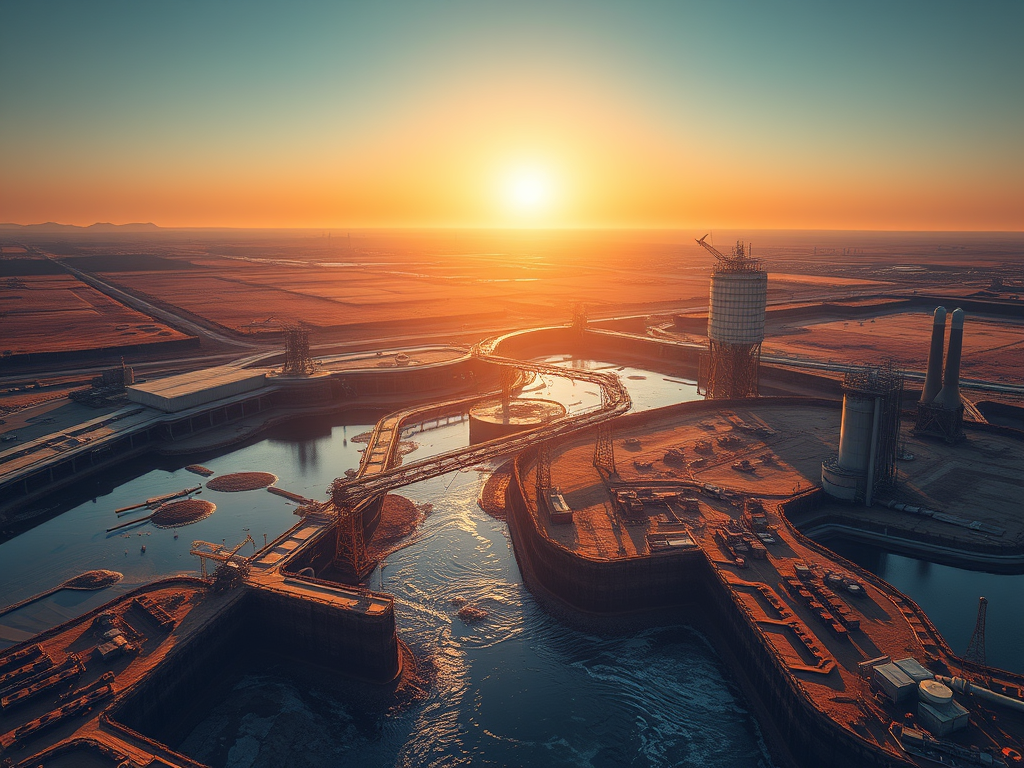
When geopolitical analysts discuss global resource conflicts, oil usually dominates the conversation. Yet a quieter but potentially more transformative resource challenge is emerging: water scarcity.
Unlike oil, water has no substitutes for agriculture, industry, or human survival.
As population growth, climate change, and industrial expansion increase pressure on freshwater resources, water is rapidly evolving from a local environmental issue into a global geopolitical concern.
This market research article deals with water as strategic source for nations and industries, highlights which industries of present and future are dependent heavily on water and future outlook with industrial strategy.
Water is Emerging as the Next Strategic Resource
Recent disputes from tensions over the Nile River between Ethiopia, Egypt, and Sudan to water-sharing conflicts across Central Asia and South Asia illustrate how access to water is becoming a strategic issue. The World Bank estimates that by 2050 nearly half of the global population could face water stress, with economic losses reaching up to 6% of GDP in water-scarce regions.
For businesses and policymakers alike, the implications extend far beyond agriculture or municipal supply. Water scarcity directly affects multiple sectors including energy, food processing, textiles, semiconductors, beverages, mining, and packaging industries. In the coming decades, water availability may increasingly shape industrial location decisions, supply chains, and geopolitical alliances.
This article examines how water scarcity is reshaping global geopolitics, which industries face the greatest risks, and why the emerging water industry itself ranging from treatment technologies to packaging and infrastructure is becoming one of the most important economic sectors of the future.
Water and Geopolitics: From Local Resource to Strategic Asset
Water has historically played a role in regional politics. River systems such as the Nile, the Indus, and the Mekong sustain hundreds of millions of people across multiple countries. When upstream nations build dams or divert water flows, downstream states often perceive these actions as threats to their economic and political stability.
One of the most prominent contemporary examples is the Grand Ethiopian Renaissance Dam (GERD) on the Blue Nile. Ethiopia views the dam as essential for energy development and economic growth, while Egypt fears it could reduce water availability for agriculture and domestic consumption. Similar tensions exist along the Indus River basin between India and Pakistan, where water-sharing agreements remain politically sensitive.
Climate change intensifies these geopolitical pressures. Rising temperatures alter rainfall patterns and accelerate glacier melt, affecting river flows that sustain large populations. As water availability becomes more unpredictable, governments increasingly treat water infrastructure dams, reservoirs, pipelines, and desalination plants as strategic assets.
Unlike oil, which can be transported globally through shipping and pipelines, freshwater resources are geographically fixed. This makes water disputes particularly sensitive because countries cannot easily replace lost supplies through trade.
The Water–Industry Nexus
Water scarcity is not only a geopolitical issue; it is also an industrial one. Modern manufacturing depends heavily on water for cooling, cleaning, processing, and chemical reactions.
According to the United Nations, industry accounts for nearly 19% of global freshwater withdrawals, while agriculture consumes around 70%. As industrial activity expands in emerging economies, competition between agriculture, urban populations, and manufacturing will intensify.
Several industries are especially vulnerable to water shortages.
Industries Most Exposed to Water Scarcity
1. Semiconductor Manufacturing
Semiconductor fabrication is one of the most water-intensive industrial processes. Producing microchips requires ultra-pure water for cleaning silicon wafers, often in enormous quantities.
Taiwan’s semiconductor industry, which produces a large share of the world’s advanced chips, has already faced operational challenges during drought periods. Water shortages forced the government to prioritize industrial water supply over agricultural irrigation, demonstrating the strategic importance of semiconductor production.
As the global digital economy expands, water availability may influence the geographic location of future semiconductor plants.
2. Energy and Power Generation
Thermal power plants including coal, nuclear, and gas facilities require vast quantities of water for cooling systems. Water scarcity can therefore disrupt electricity generation.
Several power plants in India and South Africa have experienced temporary shutdowns due to insufficient water availability. As climate variability increases, energy infrastructure will need to adopt alternative cooling technologies or relocate to water-abundant regions.
The water–energy nexus is becoming one of the most important policy challenges in industrial development.
3. Textile and Apparel Manufacturing
The textile industry is another major water consumer. Dyeing, washing, and finishing processes require substantial water volumes and often generate polluted wastewater.
Countries such as India, Bangladesh, and Vietnam major textile exporters face increasing pressure to adopt water-efficient manufacturing technologies. Sustainable production standards demanded by global brands are accelerating this transition.
For textile manufacturers, water efficiency is becoming both an environmental necessity and a competitive advantage.
4. Food Processing and Agriculture Supply Chains
Food processing companies rely heavily on water for cleaning, cooking, and packaging operations. More importantly, their supply chains depend on water-intensive agriculture.
Water shortages can therefore affect not only farm yields but also the entire food production ecosystem—from grain milling to beverage manufacturing.
As climate variability affects rainfall patterns, food companies will increasingly need to invest in water-efficient sourcing and irrigation technologies.
5. Beverage and Bottled Water Companies
Few industries are more directly linked to water availability than beverage production. Soft drink manufacturers, breweries, and bottled water companies depend on reliable water sources.
In recent years, several beverage companies have faced community opposition in water-scarce regions where local populations believe industrial water extraction threatens domestic supply.
These controversies highlight the importance of responsible water management and community engagement for companies operating in this sector.
Water Scarcity and Supply Chain Risk
Water shortages can disrupt global supply chains in unexpected ways. Manufacturing hubs often emerge in regions where labour costs are low or where governments provide incentives for industrial investment. However, these locations may not always have sustainable water resources.
For example, northern China’s industrial regions face severe groundwater depletion. Similarly, many technology manufacturing clusters are located in areas experiencing increasing drought risk.
Companies are therefore beginning to incorporate water risk assessments into supply chain planning. Investors and regulators are also paying closer attention to corporate water use, particularly in water-stressed regions.
The Emerging Water Industry
While water scarcity creates challenges for existing industries, it also generates opportunities for new economic sectors.
The global water industry including treatment technologies, desalination systems, recycling infrastructure, and smart water management solutions is expected to grow rapidly in the coming decades.
Several segments of the water economy are already expanding.
- Water Treatment and Recycling
Industrial water recycling systems allow companies to reuse wastewater within manufacturing processes, reducing both costs and environmental impact.
Technologies such as membrane filtration, reverse osmosis, and advanced biological treatment are increasingly adopted by factories seeking to minimize freshwater consumption.
- Desalination
Desalination the process of removing salt from seawater is becoming a crucial technology for water-scarce regions. Countries in the Middle East, including Saudi Arabia and the United Arab Emirates, have invested heavily in desalination infrastructure to secure urban water supply.
Although desalination remains energy-intensive and expensive, technological improvements are gradually reducing costs.
- Smart Water Infrastructure
Digital technologies are transforming water management systems. Sensors, artificial intelligence, and real-time monitoring tools help utilities detect leaks, optimize distribution networks, and manage water demand more efficiently.
These technologies create opportunities for technology companies entering the water sector.
- Sustainable Packaging and Water Products
As consumers become more conscious of environmental issues, demand for sustainable packaging and water-efficient consumer products is rising.
Packaging companies are developing recyclable materials and water-efficient manufacturing processes to meet regulatory and consumer expectations.
Water-efficient packaging solutions may become particularly important for beverage and food industries.
Water as the “Next Oil”?
Some analysts argue that water could become the “next oil” in terms of geopolitical importance. While the comparison is imperfect—water cannot be globally traded in the same way as oil—it reflects the growing recognition that water security influences economic stability.
Regions facing severe water stress may experience increased migration pressures, agricultural decline, and political instability. Conversely, countries with abundant water resources may gain strategic advantages.
For example, water-rich regions could attract water-intensive industries seeking reliable supply.
Future Outlook: Water and Industrial Strategy
Looking ahead, water availability will increasingly shape industrial strategy in three major ways.
1. Industrial Relocation: Companies may shift manufacturing facilities toward regions with sustainable water supplies. Water risk assessments will become as important as labor costs and logistics.
2. Technology Innovation: Water-saving technologies will become critical across sectors. Innovations in recycling, desalination, and efficient irrigation could dramatically reduce industrial water demand.
3. Policy and Regulation: Governments will introduce stricter regulations on industrial water usage, particularly in water-stressed regions. Businesses will need to adapt to new compliance requirements.
Water as a Defining Resource of the Twenty-First Century
Water is gradually emerging as one of the most strategic resources of the twenty-first century. While oil dominated geopolitics during the industrial era, water scarcity is increasingly influencing global politics, economic development, and industrial planning.
From semiconductor manufacturing and power generation to food production and packaging industries, water availability now shapes the viability of entire economic sectors. At the same time, the expanding water industry from desalination to smart infrastructure offers significant opportunities for technological innovation and investment.
Understanding the geopolitics of water is therefore essential for policymakers, businesses, and investors seeking to navigate the future global economy.
In a world where freshwater resources are becoming increasingly constrained, water security may soon become as important as energy security once was.



Leave a Reply