
Author: Vaibhavi Pingale
-
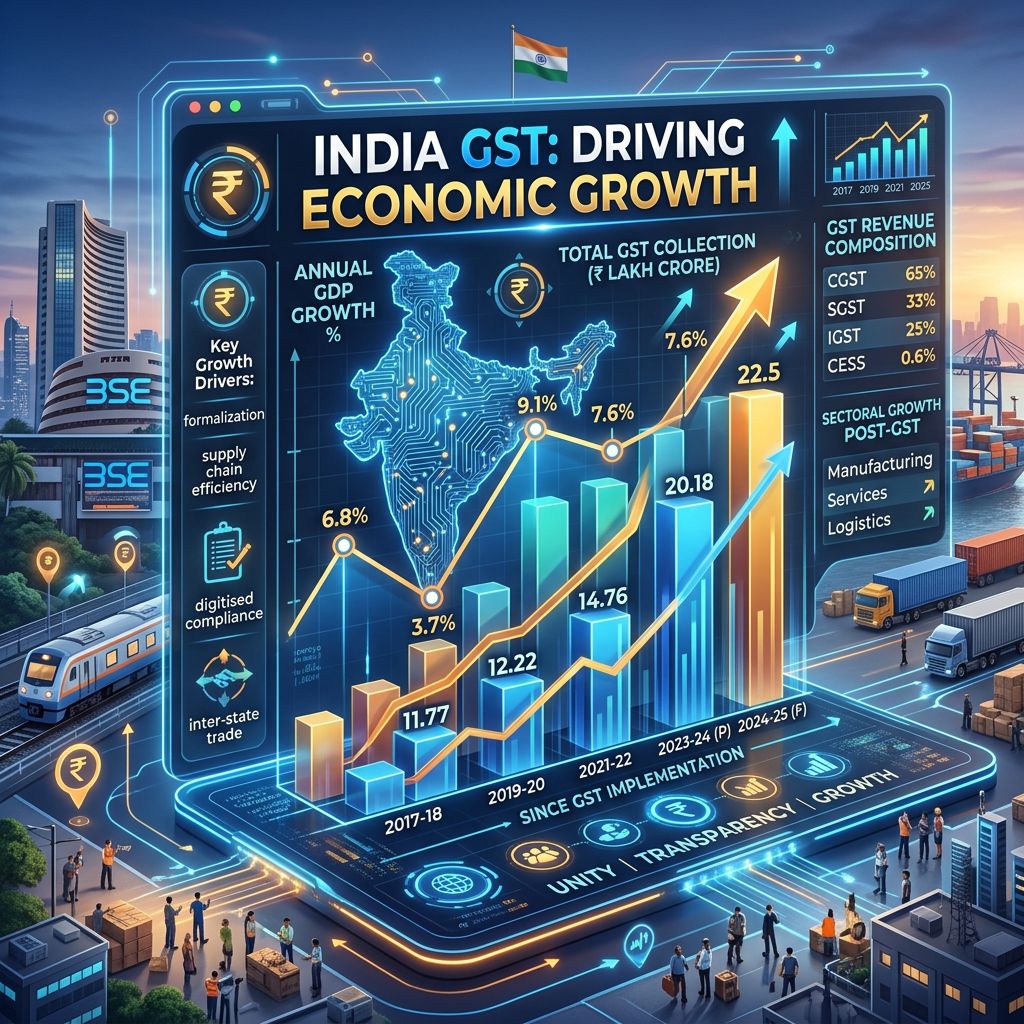
9 years of evidence on India’s economic transformation through GST
When the Goods and Services Tax (GST) was introduced in July 2017, it was not merely a tax reform. It was an attempt to reorganise India’s economic architecture. The reform aimed to replace multiple indirect taxes with a unified tax system, reduce cascading, create a common national market, improve transparency, and strengthen Centre–State fiscal coordination.…
-

Indonesia’s Palm Oil Under El Niño Pressure?
For most countries, El Niño is treated as a climate event. For Indonesia, it is an economic event with global consequences. Indonesia is not merely another agricultural exporter. It is the world’s largest producer and exporter of palm oil, supplying a commodity deeply embedded in: Palm oil is present in nearly half of packaged consumer…
-

RIVA & EWS Analysis reveals Who Stays Safe and Who Gains During Wars?
Wars disrupt global economies unevenly. This flagship analysis maps which countries remain resilient, which industries are insulated, and why economic structure not neutrality determines outcomes. This article is based on VP Research Company’s proprietary, copyrighted RIVA (Resilience-Intelligence-Vision-Analytics) & EWS (Early Warning System) strategic cross-sector disruption mapping intelligence system. War as an Uneven Economic Shock Wars…
-

Water Wars? How Scarcity is Reshaping Global Industry and Geopolitics
When geopolitical analysts discuss global resource conflicts, oil usually dominates the conversation. Yet a quieter but potentially more transformative resource challenge is emerging: water scarcity. Unlike oil, water has no substitutes for agriculture, industry, or human survival. As population growth, climate change, and industrial expansion increase pressure on freshwater resources, water is rapidly evolving from…
-

India’s GI Saree Economy: A High-Value Business Opportunity
India’s saree is often viewed as cultural attire. From a business perspective, however, it represents one of the largest under-leveraged heritage economies in the world. At the intersection of tradition, employment, intellectual property (GI tags), and global sustainable fashion demand lies a scalable business opportunity waiting to be organised, branded, and monetised. This article analyses…
-

Where does India stand in terms of Global Trade in 2026?
India’s trade performance in 2025–26 reflects a country that has clearly expanded its global footprint, strengthened its services dominance, and diversified export markets. Yet, the data also reveal structural asymmetries that prevent India from fully converting its economic scale into trade power. The question is no longer whether India is integrated into the global trading…
-
Budget 2026–27 and India’s Export Strategy Shift
India’s export strategy is undergoing a discernible shift in Union Budget 2026–27. Instead of a headline-heavy approach anchored primarily in sectoral incentives, the Budget moves toward a systems-led export competitiveness model built on trade facilitation, trusted-trader architecture, customs digitisation, logistics corridors, and targeted input-cost rationalisation. The message is clear: India wants to win export markets…
-

What Employers and Employees Must Know About Urban Jobs and Skills by 2030?
By 2030, urban labour markets will be shaped by three force multipliers: automation (especially AI), continued urbanization, and intensified cross-border and internal migration. Together they will reallocate work across cities, alter wage structures, and rewrite the skills playbook for both employers and employees. Employers face the paradox of higher talent shortages and higher automation potential…
-

Why Don’t We Measure Equality? Rethinking the Methodology of SDG 10
The global development community has spent decades quantifying inequality of income, wealth, education, opportunity, and social mobility. From the Gini Coefficient to Theil Index, Palma Ratio, and Oaxaca–Blinder Decomposition, we have built sophisticated tools to capture how unequally resources are distributed. But rarely do we ask a deceptively simple question: why do we measure inequality,…
-

Can Universal Social Security Be Sustainable? The Case of New Zealand
Around the world, governments struggle to balance the ideals of universal social protection with the realities of fiscal limits. Universalism — where benefits are given to all citizens regardless of income or contribution — is admired for its inclusivity and simplicity. Yet, critics argue that such generosity is fiscally unsustainable in the long run, particularly…