
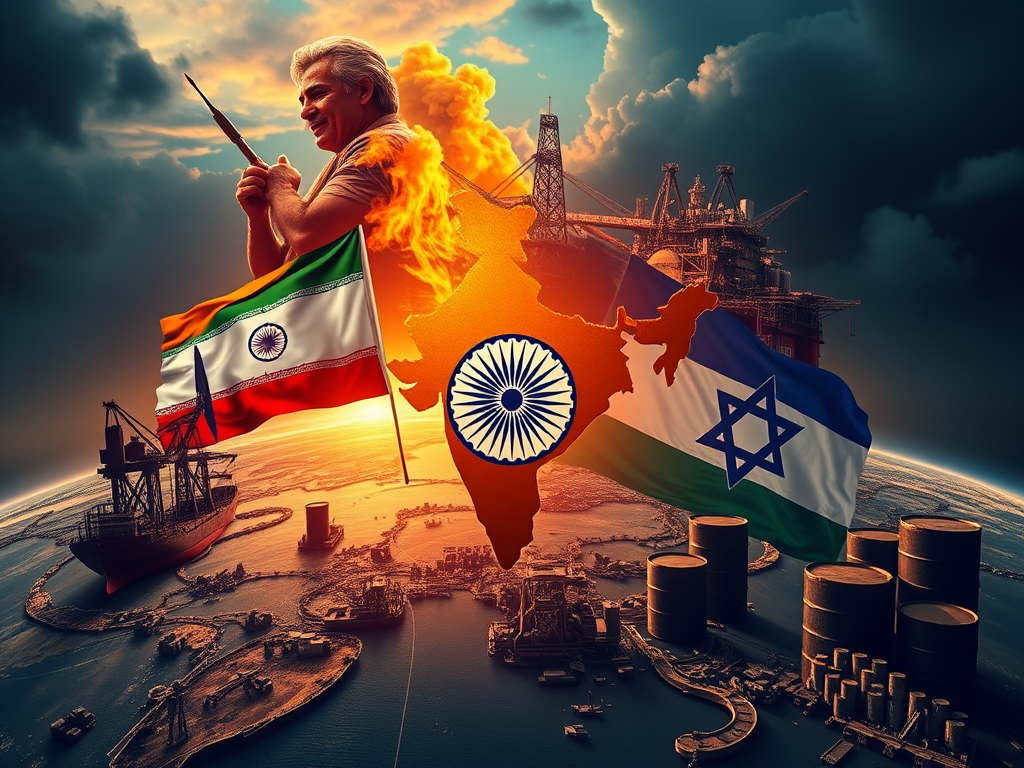
The Iran–Israel conflict represents one of the most volatile fault lines in contemporary geopolitics. In early 2026, the confrontation expanded beyond proxy tensions into a broader regional crisis following coordinated military strikes on Iran and retaliatory attacks across the Gulf. The consequences have not remained confined to the Middle East. Attacks on commercial vessels, the near paralysis of shipping through the Strait of Hormuz, and sharp spikes in oil prices have triggered a global economic shock.
For India, the crisis poses a complex strategic challenge. India maintains deep diplomatic, economic, and technological ties with both Iran and Israel. While Israel is a critical defense and technology partner, Iran remains central to India’s energy security and regional connectivity ambitions. As a result, India’s response has largely been characterized by strategic neutrality. This position is not simply diplomatic caution but a calculated effort to protect national economic interests, trade routes, and regional stability.
India’s approach reflects a broader philosophy within its foreign policy known as strategic autonomy. Rather than aligning rigidly with one geopolitical bloc, India attempts to maintain relationships with multiple partners simultaneously. In the context of the Iran–Israel conflict, this strategy allows India to preserve ties with both countries while safeguarding its economic and geopolitical priorities.
Historical Foundations of India’s Balanced Approach
India’s relationships with both Iran and Israel are rooted in distinct strategic interests. Iran has historically been important to India as both an energy supplier and a gateway to Central Asia. The development of the Chabahar Port was intended to provide India with direct trade access to Afghanistan and Central Asia while bypassing Pakistan.
At the same time, India’s partnership with Israel has expanded rapidly since the early 1990s. Israel has become one of India’s most important defense suppliers, providing advanced technologies ranging from missile defense systems to drones and surveillance platforms. Cooperation between the two countries also extends into agriculture, water management, artificial intelligence, and cybersecurity.
Supporting either side openly in the current conflict would risk undermining one of these strategic relationships. India’s neutrality therefore reflects a pragmatic recognition that its long term economic and security interests are tied to maintaining engagement with both countries.
Energy Security and Economic Stability
Energy security remains the most immediate economic concern shaping India’s foreign policy stance. India imports nearly 88 percent of its crude oil, with a large share coming from the Middle East and much of it transported through the Strait of Hormuz.
The escalation of the Iran war in late February 2026 dramatically disrupted these supply routes. Shipping traffic through the Strait of Hormuz dropped sharply as vessels avoided the region following missile strikes and drone attacks on tankers. The strait normally carries around one fifth of the world’s oil supply, making it one of the most critical energy chokepoints in the global economy. The economic impact has been immediate. Brent crude prices surged above 100 dollars per barrel and briefly approached 120 dollars amid fears of prolonged supply disruptions Some analysts warn that if the disruption continues, prices could climb even higher and trigger a broader global economic slowdown.
For India, such price spikes have direct macroeconomic consequences. Higher crude prices increase the country’s import bill, widen the current account deficit, and contribute to domestic inflation. Rising transportation and energy costs ripple across sectors ranging from manufacturing to agriculture.
These pressures explain why India has avoided taking a confrontational diplomatic stance in the conflict. Preserving stability in energy markets is not merely a foreign policy objective but an economic necessity.
Shipping Routes and the Vulnerability of Global Trade
Beyond oil markets, the conflict has exposed the vulnerability of the maritime trade routes on which India’s economy depends. The Strait of Hormuz serves as a gateway not only for oil shipments but also for liquefied natural gas, fertilizers, and other commodities vital to Asian economies.
The 2026 crisis has already seen multiple vessels damaged and shipping insurance costs surge dramatically. At one point, tanker traffic through the strait dropped by more than 70 percent as shipping companies suspended operations in the region due to security risks.
For India, which relies heavily on maritime trade for both imports and exports, disruptions to these routes carry serious economic implications. Industries dependent on imported energy, fertilizers, and raw materials face rising costs and supply uncertainties. In fact, analysts warn that India could face exposure to fertilizer supply disruptions of up to 20 to 25 percent due to the conflict. These pressures also threaten major connectivity initiatives. The India Middle East Europe Economic Corridor, announced with significant diplomatic momentum in recent years, depends on a stable West Asian region. Prolonged instability in the Gulf risks delaying or even undermining the corridor’s strategic promise as an alternative trade route linking India to Europe.
In this context, India’s neutral diplomatic stance can be interpreted as an effort to safeguard maritime stability rather than merely avoid taking sides.
Diplomatic Balancing in a Multipolar World
India’s position also reflects broader shifts in global geopolitics. The international system is increasingly characterized by multipolar competition rather than rigid alliances. In such an environment, countries often pursue flexible partnerships across competing blocs.
India’s foreign policy increasingly reflects this reality. The country maintains strong strategic ties with the United States while simultaneously participating in groupings such as BRICS and maintaining close relations with Gulf states and Iran.
Strategic neutrality allows India to maintain dialogue with multiple actors during crises. It also strengthens India’s reputation as an independent diplomatic player capable of engaging with diverse geopolitical partners.
However, this balancing act is becoming increasingly difficult. As tensions intensify, external pressure on India may grow. Western policymakers have already expressed concern over India’s energy purchases from sanctioned states such as Russia, and similar scrutiny could extend to energy or infrastructure cooperation involving Iran.
The Risks and Criticisms of Neutrality
Despite its strategic advantages, India’s policy of neutrality carries significant risks. Critics argue that remaining equidistant from both sides can sometimes appear ambiguous, particularly during periods of escalating violence.
There are also practical challenges if the conflict expands further. Even without direct involvement, India would face the economic consequences of a prolonged regional war. Energy prices could remain elevated, global inflation could rise, and international shipping routes could remain unstable.
Another major concern is the safety of the Indian diaspora in the Gulf region. Nearly nine million Indians live and work across Gulf countries, forming one of the largest expatriate communities in the world. In the event of a broader regional escalation, the logistics of evacuation and repatriation could become one of the most pressing challenges for Indian policymakers.
Furthermore, geopolitical distractions in the Middle East may indirectly benefit other global powers. A prolonged regional crisis diverts diplomatic attention and resources, creating strategic space for rival powers to consolidate influence in other regions.
A Strategy of Pragmatic Engagement
Despite these challenges, India’s diplomatic response reflects a pragmatic assessment of its national interests. By maintaining balanced relations with both Iran and Israel, India avoids being drawn into a conflict that offers little strategic benefit but carries substantial economic risk.
This approach also aligns with India’s broader ambition to emerge as a major economic power that prioritizes stability, trade connectivity, and development. Rather than viewing foreign policy purely through ideological alliances, India increasingly frames its diplomatic choices through the lens of economic resilience.
The emphasis on energy security, stable shipping routes, and diversified diplomatic partnerships illustrates how economic considerations are shaping the country’s geopolitical strategy.
Conclusion
India’s neutrality in the Iran–Israel conflict illustrates the complex relationship between geopolitics and economic security in an interconnected world. The current crisis, marked by disrupted shipping routes, volatile oil markets, and heightened regional tensions, demonstrates how quickly geopolitical shocks can ripple through the global economy.
For India, the challenge lies in navigating these pressures without sacrificing long term strategic partnerships or economic stability. Strategic neutrality offers a pathway to maintain diplomatic flexibility while protecting vital national interests.
Yet neutrality is not a passive position. In an era of rising geopolitical competition, it requires careful balancing, economic resilience, and constant diplomatic engagement. Whether India can sustain this balance in the face of intensifying global rivalries may ultimately determine how successfully it navigates the emerging geopolitical order.
Author

Make Tatvita one of your preferred sources
See more insights from Tatvita Analysts in your Google Search results.



Leave a Reply