
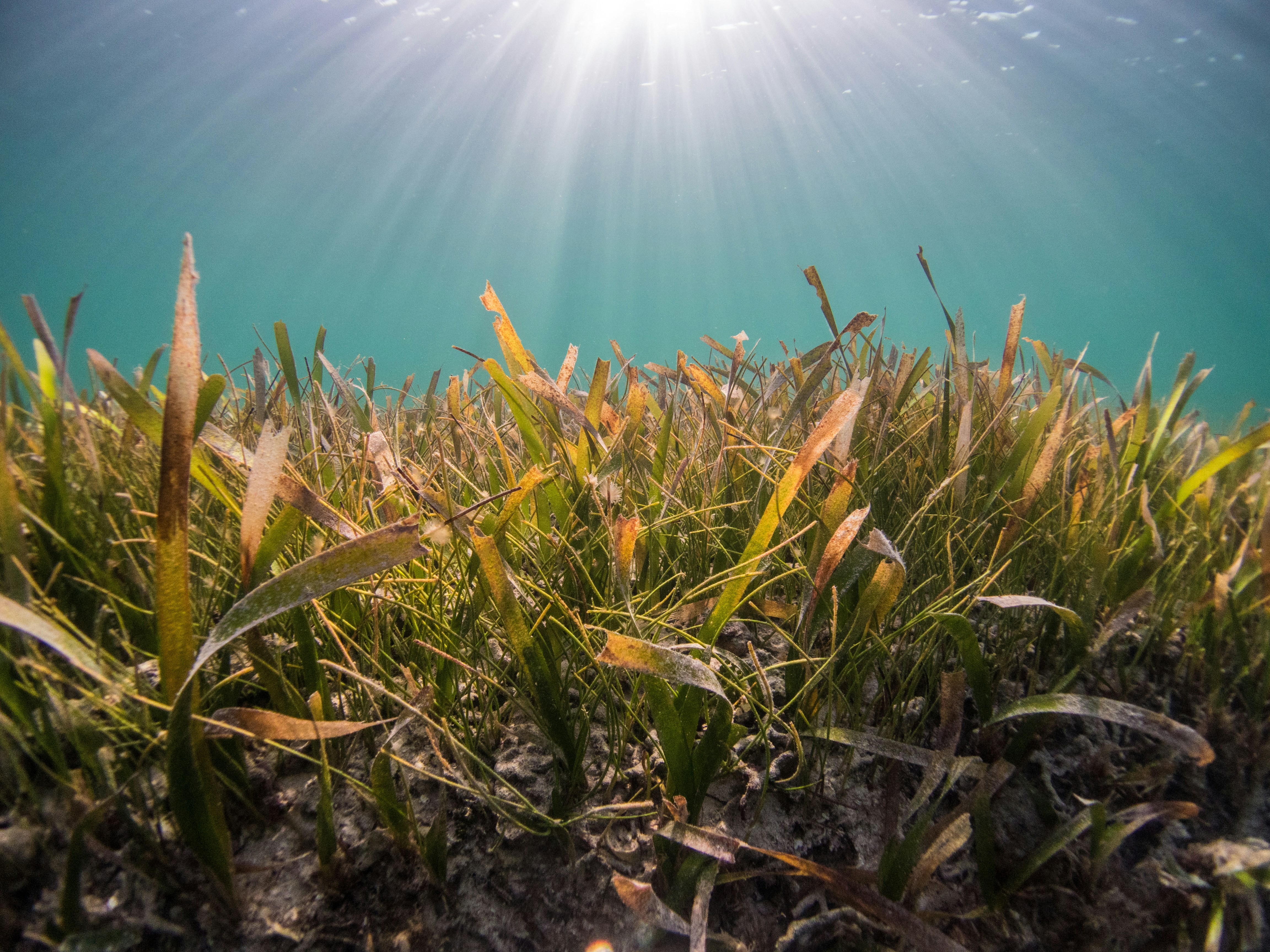
Coastal degradation rarely announces itself through sudden collapse. It accumulates gradually through mangroves cleared for aquaculture, seagrass beds degraded by pollution, and coastlines that retreat incrementally each year.
For Indonesia, an archipelagic nation where economic activity, livelihoods, and climate exposure are deeply tied to the sea, this slow erosion has become a structural development challenge. Climate action here cannot be confined to energy systems or transport transitions; it is inseparable from how coastal ecosystems are governed, valued, and integrated into economic planning.
Indonesia’s response has increasingly centred on blue carbon the carbon captured and stored in coastal and marine ecosystems such as mangroves, seagrass meadows, and tidal marshes. This shift reflects a broader recalibration of conservation policy: from viewing coastal ecosystems as environmental assets to recognising them as climate infrastructure with measurable mitigation, adaptation, and economic value.
Why Blue Carbon Matters in Indonesia’s Context
Indonesia occupies a pivotal position in the global blue carbon landscape. The country hosts approximately 3.44 million hectares of mangroves, accounting for nearly one-fifth of global mangrove coverage, alongside extensive seagrass ecosystems and tidal wetlands. Scientific assessments consistently show that mangrove soils store carbon at densities several times higher than most terrestrial forests on a per-hectare basis, locking carbon away for centuries when left undisturbed.
Beyond climate mitigation, these ecosystems underpin fisheries productivity, protect coastlines from storm surges and erosion, and support millions of coastal livelihoods. Yet for decades, their long-term value was systematically undervalued. Mangroves were cleared for shrimp farming, infrastructure expansion, and urban development activities that generated immediate economic returns but released stored carbon, weakened natural coastal defences, and increased climate vulnerability.
This exposed a fundamental policy problem: the benefits of conservation are long-term and widely distributed, while the costs are immediate and locally concentrated. Traditional conservation tools struggled to overcome this mismatch.
Why Indonesia Turned to Blue Carbon
Indonesia’s turn toward blue carbon was driven by three converging pressures.
First, accelerating coastal ecosystem loss began to undermine fisheries, livelihoods, and coastal resilience. Second, climate vulnerability intensified, particularly for low-lying coastal regions exposed to flooding and erosion. Third, conventional conservation approaches, such as protected areas, regulatory restrictions, and project-based restoration, proved insufficient due to limited funding, uneven enforcement, and weak integration with development priorities.
Blue carbon offered a different policy logic. By recognising mangroves and other coastal ecosystems as quantifiable carbon assets, it enabled conservation to be integrated into national climate commitments, greenhouse gas accounting, and long-term development strategies. Importantly, this did not replace existing conservation measures; it corrected the economic imbalance that had consistently worked against them.
From Conservation Sites to Climate Infrastructure
Indonesia’s engagement with blue carbon began to take shape during the 2010s, as scientific understanding of coastal carbon storage improved and international climate frameworks increasingly recognised nature-based solutions. Over time, mangroves and seagrass ecosystems were more explicitly reflected in national climate planning and emissions inventories.
A more decisive shift occurred in the early 2020s, when large-scale mangrove restoration programmes were launched with explicit links to climate mitigation and adaptation goals. These initiatives adopted long planning horizons, reflecting the slow regeneration of mangrove ecosystems and the durability of carbon stored in coastal sediments. By embedding blue carbon within national climate and development frameworks, Indonesia reduced the vulnerability of coastal conservation to short political cycles, improving policy continuity and institutional commitment.
Financing Blue Carbon: Moving Beyond Environmental Budgets
A defining feature of Indonesia’s blue carbon strategy is its diversified financing model. Conservation and restoration are no longer funded solely through environmental budgets. Instead, public finance plays a central role, with national ministries allocating resources for mangrove protection, restoration, and monitoring as part of core development expenditure.
International climate finance has complemented these efforts by supporting technical frameworks, monitoring systems, and early-stage implementation. In parallel, Indonesia has explored regulated carbon market mechanisms linked to coastal ecosystems, seeking to mobilise private capital while retaining state oversight.
This blended financing approach improves scalability and fiscal resilience, but it also introduces governance challenges. Measuring and verifying carbon stored in marine ecosystems is technically complex, and ensuring that financial benefits reach coastal communities remains uneven. These issues highlight that blue carbon is as much an institutional challenge as a scientific one.
Has the Strategy Delivered Measurable Outcomes?
Assessing blue carbon outcomes requires a broader lens than emissions alone. Early evidence from Indonesia points to progress across ecological, economic, and governance dimensions. Large-scale restoration has expanded rehabilitated mangrove areas, improving coastal protection and ecosystem functionality. These interventions have also strengthened fisheries support and shoreline stability, reducing long-term exposure to climate risks.
Economically, blue carbon-linked programmes have opened alternative livelihood pathways, reducing dependence on activities that degrade coastal ecosystems. Institutionally, the strategy has improved coordination across climate, forestry, and coastal governance bodies, addressing long-standing fragmentation in policy implementation.
At the same time, constraints persist. Monitoring systems are still evolving, enforcement capacity varies across regions, and benefit-sharing mechanisms remain inconsistent. These limitations underline a central insight: blue carbon is not a quick fix, but a gradual process of institutional realignment.
Stakeholder Acceptance and Social Outcomes
Government agencies have largely embraced blue carbon due to its alignment with national climate targets and development priorities. Community acceptance, however, depends heavily on implementation design. Where initiatives include participatory planning, secure tenure arrangements, and livelihood support, local engagement has been stronger. Where these elements are weak or absent, scepticism and resistance persist.
This reinforces an important lesson: blue carbon succeeds socially only when conservation is paired with credible economic alternatives, not imposed as a top-down climate intervention.
Policy Lessons for SDG 14
Indonesia’s experience offers transferable lessons for coastal states pursuing SDG 14 (Life Below Water). First, marine conservation becomes durable when coastal ecosystems are treated as part of a country’s climate and economic architecture, rather than as isolated environmental spaces. Second, long-term outcomes depend on stable and diversified financing, combining public expenditure with climate finance and cautiously regulated market instruments.
Equally critical is institutional placement. When blue carbon is treated as a standalone climate initiative, its impact is limited. When embedded within broader coastal governance alongside land-use planning, fisheries management, and development policy, it becomes more resilient. In this sense, blue carbon strengthens rather than replaces existing SDG 14 tools by addressing the incentive and funding gaps that have historically undermined them.
A Shift in Policy Logic
Indonesia’s blue carbon strategy does not represent a perfect model, nor does it eliminate the complex trade-offs inherent in coastal governance. What it demonstrates is a shift in policy logic. By reframing mangroves and coastal ecosystems as climate infrastructure, Indonesia has begun aligning conservation objectives with development and climate priorities.
Significant challenges remain particularly around measurement, equity, and governance but the approach offers a credible pathway for countries facing similar constraints.
In Indonesia’s case, blue carbon is less about commodifying nature and more about correcting institutional failures that allowed marine ecosystems to decline quietly over time. That reframing, rather than any single policy instrument, is what makes Indonesia’s experience a global best practice worth studying.




Leave a Reply