

Railways play an integral role in the economic development of a country, serving as a backbone for freight and passenger transport. A robust railway network facilitates trade, enhances mobility, and drives regional integration, thereby contributing to economic growth. In addition to reducing transportation costs, railways create employment opportunities and attract investment by improving supply chain efficiency and connectivity. For India, with its vast geographical diversity and burgeoning economy, the development and expansion of railway routes are pivotal for sustaining growth and ensuring equitable development across states. This article focuses on railway routes in every state of India and analyses the impact it has on the income of the state.
State-wise Railway Network Overview
India’s railway network spans across states, catering to varying economic and geographical needs. An analysis of the railway routes reveals significant contributions to connectivity and economic activity.
Key Performers in Railway Infrastructure
Uttar Pradesh boasts the most extensive railway network, with 16,001 km of routes, underpinning its agricultural and industrial economy. This extensive infrastructure is vital for connecting its numerous cities and facilitating goods and passenger movement.
Maharashtra follows with 11,631 km, leveraging its railway infrastructure to support its position as a leading industrial and financial hub. Similarly, West Bengal, with 10,309 km of railway routes, benefits from its dense network that supports its trade and commerce.
In central India, Madhya Pradesh has developed a robust network with 9,702 km of railways, enhancing connectivity in a state known for its agricultural and mineral resources. Rajasthan, with 9,190 km, utilizes its railway infrastructure to boost tourism and trade.
Southern states like Tamil Nadu (6,836 km) and Karnataka (6,083 km) showcase well-established networks supporting diverse industries, including IT, manufacturing, and textiles. Conversely, smaller states and union territories such as Mizoram (6 km) and Nagaland (23 km) have limited networks, reflecting their geographical constraints and smaller economies.
Railway Routes and Gross State Domestic Product (GSDP)
The railway network’s contribution to state economies is reflected in the Gross State Domestic Product (GSDP). Maharashtra, with the highest GSDP of Rs. 404,425,073 lakh, leverages its extensive railway network for industrial freight and passenger movement, facilitating economic output.
Similarly, Tamil Nadu and Karnataka, with GSDPs of Rs. 272,157,051 lakh and Rs. 250,073,308 lakh respectively, benefit from their well-developed networks to support manufacturing, IT, and other economic activities.
Smaller states such as Goa, with a GSDP of Rs. 8,912,974 lakh and 111 km of railway routes, and Himachal Pradesh, with a GSDP of Rs. 20,743,031 lakh and 376 km of routes, highlight the role of tailored infrastructure in addressing specific regional needs. Northeastern states like Assam, with 3,662 km of railways, demonstrate efforts to integrate remote areas into the national economy, fostering long-term development.
Correlation Analysis
Correlation quantifies the relationship between two variables. A coefficient ranges from -1 to 1, with:
- 1: Perfect positive correlation
- -1: Perfect negative correlation
- 0: No correlation

The correlation coefficient of 0.798 indicates a strong positive relationship between railway routes and states’ income that is, GSDP, suggesting that states with more extensive railway networks tend to have higher economic output.
The positive correlation underscores the significance of railways in economic development. States with dense networks like Uttar Pradesh and Maharashtra benefit from enhanced logistics and passenger mobility, which reduce costs and improve market access. This infrastructure supports a diverse range of industries, from agriculture to manufacturing and services.
In states with smaller railway networks, such as Manipur and Mizoram, the limited infrastructure constrains economic growth. However, targeted investments in these regions can unlock latent potential, especially in sectors like tourism and resource-based industries.
The correlation also highlights the importance of equitable development. While larger states enjoy the benefits of extensive networks, smaller and hilly regions require strategic planning to overcome geographical challenges and leverage railways for growth.
Policy Implications
- Focused Investments: Prioritize railway expansion in underserved regions, especially in northeastern and hilly states, to ensure balanced economic growth.
- Modernization: Enhance existing networks with modern technologies to improve efficiency, safety, and capacity.
- Sustainability: Adopt environmentally friendly practices in railway construction and operations to minimize ecological impact.
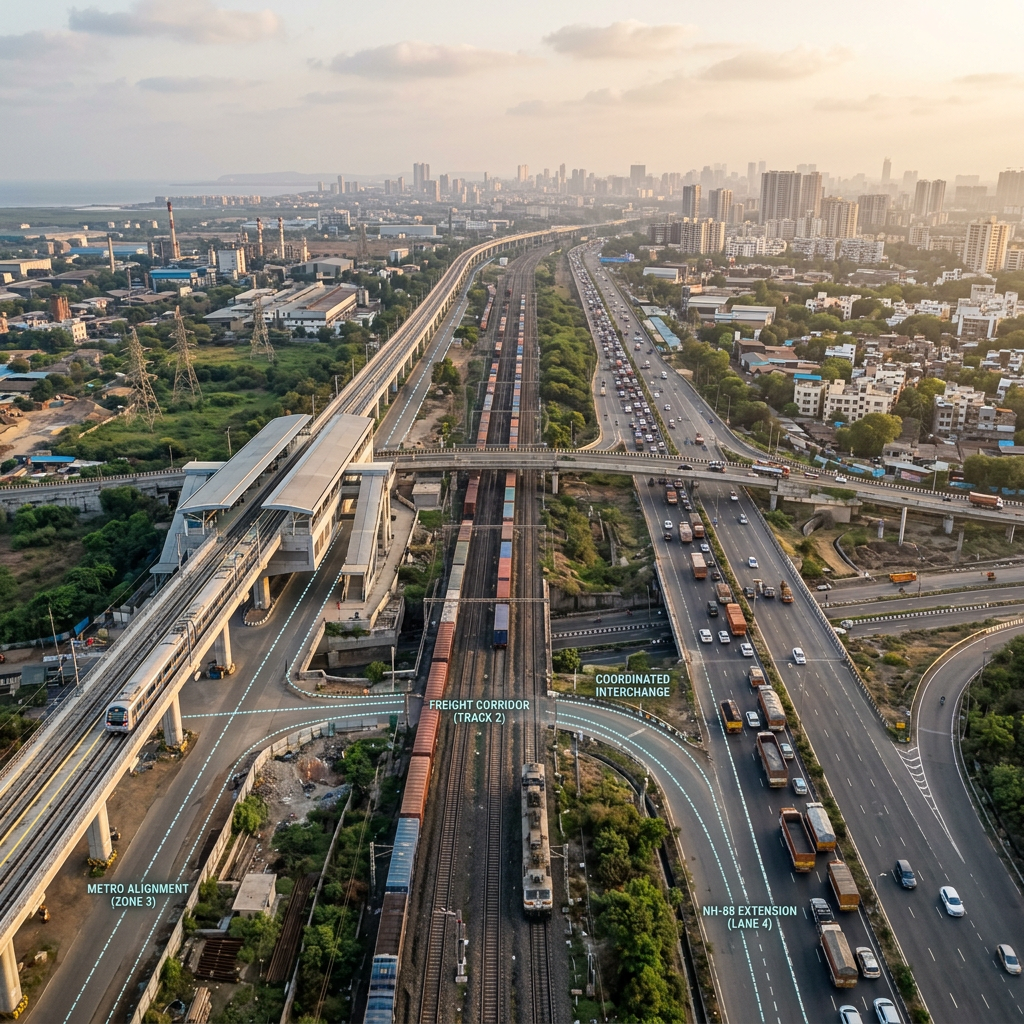
- Integration: Develop multimodal transport systems by linking railways with roadways and waterways for seamless connectivity.
Conclusion
Railways are a critical driver of economic progress, connecting markets, reducing costs, and fostering regional integration. States like Uttar Pradesh, Maharashtra, and West Bengal demonstrate the transformative impact of extensive railway networks on economic output. The correlation coefficient of 0.798 between railway routes and GSDP underscores the significant role of infrastructure in shaping state economies. Moving forward, investments in railway development, particularly in underserved regions, can unlock new opportunities, drive inclusive growth, and strengthen India’s position as a global economic powerhouse.
Author

Make Tatvita one of your preferred sources
See more insights from Tatvita Analysts in your Google Search results.


Leave a Reply