
Author: Vaibhavi Pingale
-

Where does India stand in terms of Global Trade in 2026?
India’s trade performance in 2025–26 reflects a country that has clearly expanded its global footprint, strengthened its services dominance, and diversified export markets. Yet, the data also reveal structural asymmetries that prevent India from fully converting its economic scale into trade power. The question is no longer whether India is integrated into the global trading…
-
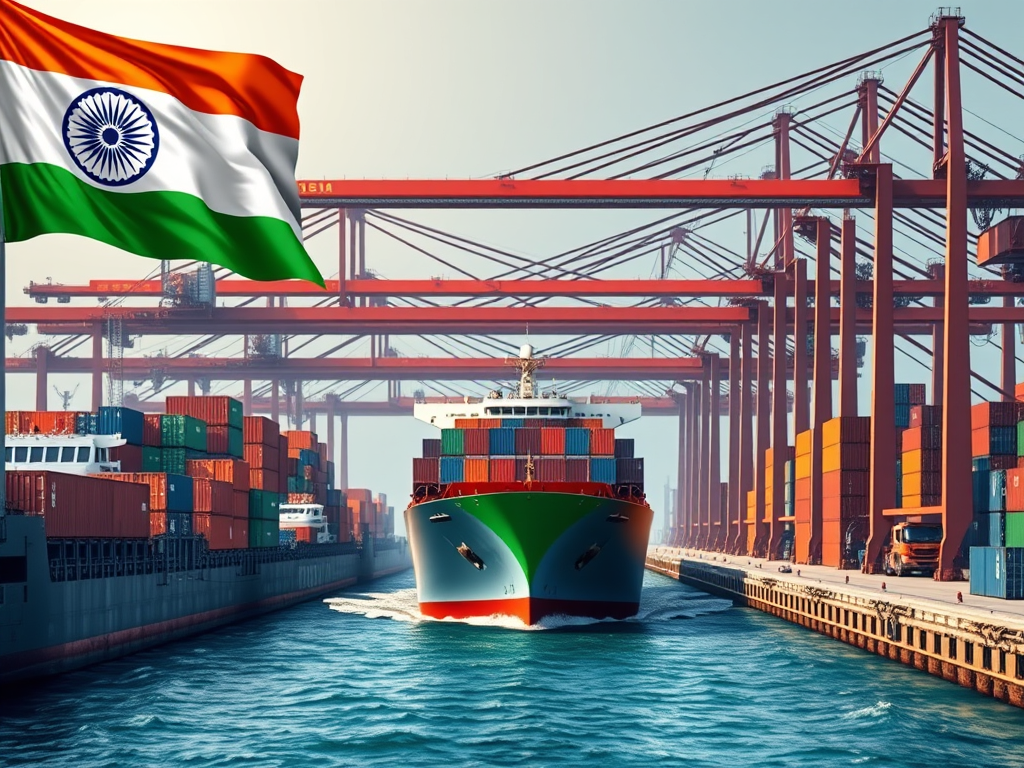
Budget 2026–27 and India’s Export Strategy Shift
India’s export strategy is undergoing a discernible shift in Union Budget 2026–27. Instead of a headline-heavy approach anchored primarily in sectoral incentives, the Budget moves toward a systems-led export competitiveness model built on trade facilitation, trusted-trader architecture, customs digitisation, logistics corridors, and targeted input-cost rationalisation. The message is clear: India wants to win export markets…
-

What Employers and Employees Must Know About Urban Jobs and Skills by 2030?
By 2030, urban labour markets will be shaped by three force multipliers: automation (especially AI), continued urbanization, and intensified cross-border and internal migration. Together they will reallocate work across cities, alter wage structures, and rewrite the skills playbook for both employers and employees. Employers face the paradox of higher talent shortages and higher automation potential…
-

Why Don’t We Measure Equality? Rethinking the Methodology of SDG 10
The global development community has spent decades quantifying inequality of income, wealth, education, opportunity, and social mobility. From the Gini Coefficient to Theil Index, Palma Ratio, and Oaxaca–Blinder Decomposition, we have built sophisticated tools to capture how unequally resources are distributed. But rarely do we ask a deceptively simple question: why do we measure inequality,…
-

Can Universal Social Security Be Sustainable? The Case of New Zealand
Around the world, governments struggle to balance the ideals of universal social protection with the realities of fiscal limits. Universalism — where benefits are given to all citizens regardless of income or contribution — is admired for its inclusivity and simplicity. Yet, critics argue that such generosity is fiscally unsustainable in the long run, particularly…
-

Why is “Jobs” a concern for Governments across the World?
Jobs are at the heart of politics, economics, and society. For governments across the world, employment is more than an economic indicator — it is a measure of legitimacy, stability, and social contract. Whether in developed economies facing technological disruptions, emerging markets grappling with demographic surges, or fragile states struggling with resource constraints, the question…
-

Market Intelligence & Data Insights of Gender Equality Turning Cost into Competitive Advantage
For decades, corporate leaders have framed gender equality as either a moral obligation or a compliance issue. In practice, many boardrooms quietly perceive women employees as a “cost burden.” Maternity leaves, flexible work arrangements, and childcare facilities appear to add expenses without direct revenue. The result? Women leave the labour market, and companies lose access…
-

What is Financial Literacy & why is it an essential skill?
In today’s increasingly digital and interconnected world, financial literacy is no longer a luxury—it’s a basic life skill. Whether you are a student, homemaker, salaried professional, business owner, farmer, or gig worker, understanding how money works can determine your financial security and quality of life. Despite rapid improvements in financial inclusion in India—such as bank…
-

Indian States Finance Datasheet
This report provides a comprehensive analysis of the fiscal capacity of India’s 30 states and Union Territories (UTs) within the framework of the country’s quasi-federal structure. This system enables both the Central (Union) government and state governments to implement localized developmental activities, fostering economic growth tailored to regional needs. The report focuses on three key…
-

Indian Labour-Force Estimation using PLFS Data
Estimating the labour force in India is crucial for understanding the dynamics of its economy and planning effective policies that promote sustainable development. With a diverse population exceeding 1.4 billion, India presents a complex labour landscape characterised by significant regional disparities, gender differences, and varying levels of economic development. The periodic labour force survey conducted…