
June 2026
-

What must India do to improve its export competitiveness with ASEAN?
Sixteen years after the ASEAN–India Free Trade Agreement (AIFTA) came into force, the key question is no longer whether trade has grown. It has. The more important question is why India’s imports from ASEAN continue to grow significantly faster than its exports, and what this reveal about India’s export competitiveness in one of the world’s…
-

The Economics of Undersea Cables: How Geopolitical Conflicts Threaten the Invisible Infrastructure of Global Trade
The economic consequences of war are often measured through damaged infrastructure, disrupted trade routes, As geopolitical tensions rise in areas like the Middle East, the topic of conversation usually moves to oil prices, shipping lanes, inflation, and potential trade disruptions. The buildup to the recent events over the Strait of Hormuz and the Red Sea…
-

Rising Petrol Prices, Falling Vehicle Dreams
Crude prices fall, but the prices at the pump don’t. While India’s automobile Industry pays the Price. Every morning at 6 AM, India’s state-run oil companies revise fuel prices. Every morning, roughly 300 million vehicle owners wake up to find the prices unchanged! Petrol in Delhi stands at 102.12 per litre as of June 5,…
-

The Hidden Aftershock of War: How Insurance Rewrites Economies
Wars are usually measured in destroyed buildings, displaced people, and lost output. But some of their most durable economic effects show up in a quieter place: insurance pricing. When conflict changes the cost of covering ships, aircraft, factories, or infrastructure, it changes whether trade happens at all, whether investment is financed, and how fast recovery…
-
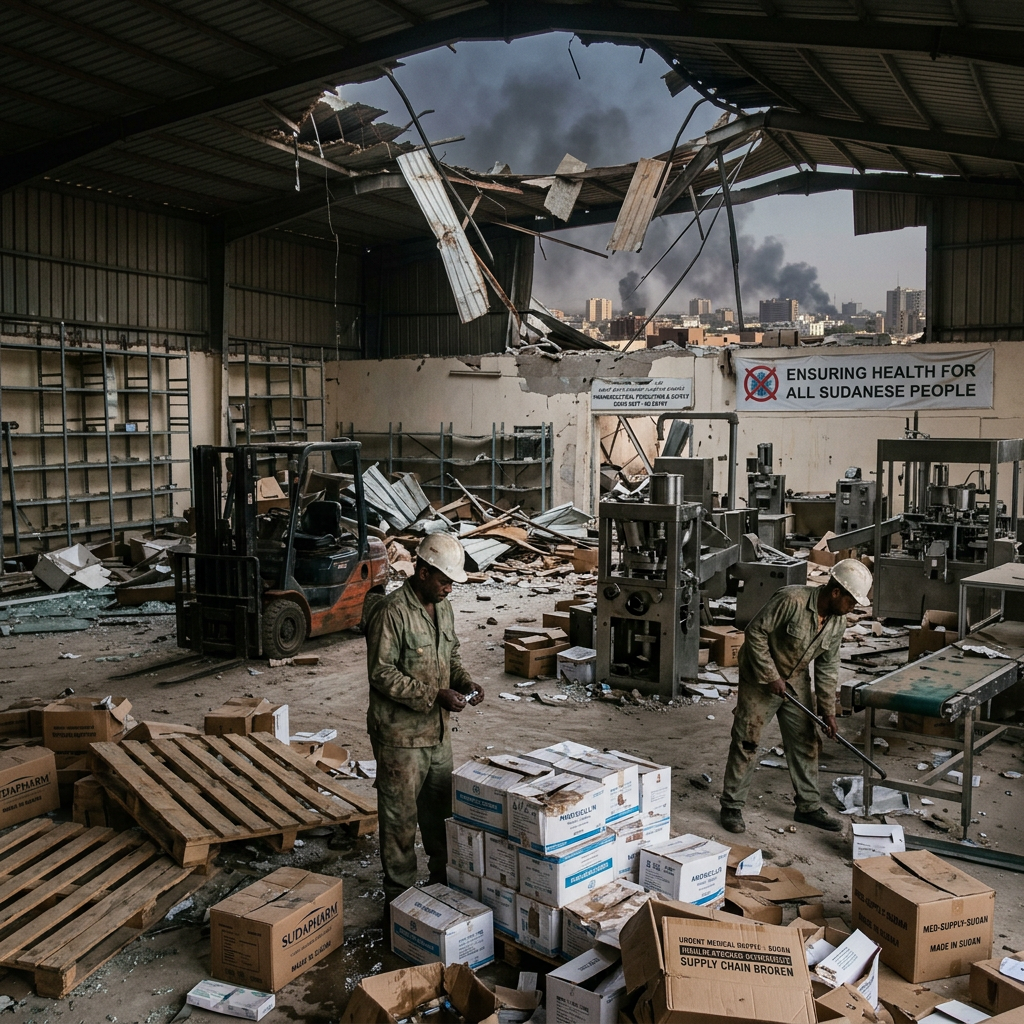
War and the Pharmaceutical Supply Chain: Lessons from Sudan
The global pharmaceutical market grew nearly fivefold between 2001 and 2023, from roughly $365 billion to $1.3 trillion, according to IQVIA, and is projected to reach $1.9 trillion by 2027. That expansion was built on comparative advantage and cost efficiency: active pharmaceutical ingredients (APIs) concentrated in India and China, formulation outsourced across Asia, distribution networks…
-

The Antimony Trap: The Silent Saboteur of Defence Supply Chains
The structural architecture of Western military readiness rests upon a gaping vulnerability: the absolute reliance on antimony (Sb) to sustain basic kinetic output. Weapons systems require mass. Pure lead, while ballistically dense and highly malleable for industrial-scale manufacturing, rapidly deforms under the catastrophic thermal and pressure spikes of rifled barrel ignition. This structural failure introduces…
-

How Wars Are Affecting India’s Aviation Sector
India’s aviation sector is one of the fastest-growing in the world. With over 152 million domestic passengers carried in 2023-24 and a government target of 300 operational airports by 2030 under the UDAN scheme, the industry has been on a remarkable growth trajectory. But between April 2025 and mid-2026, India’s airlines have faced a near-perfect…